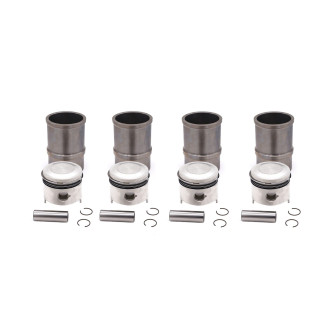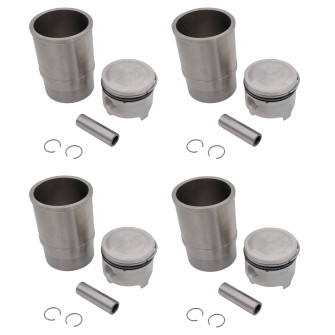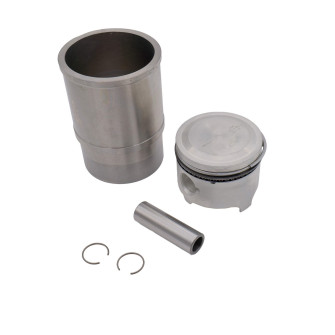
Today, rectification is part of ALEPOC's history, but the distribution of parts for vintage vehicles such as shirt and piston sets are at the heart of our activity. We offer you a brief overview of the iconic engines that can come back to life thanks to this essential element.
Shirt and piston sets for old engines Renault
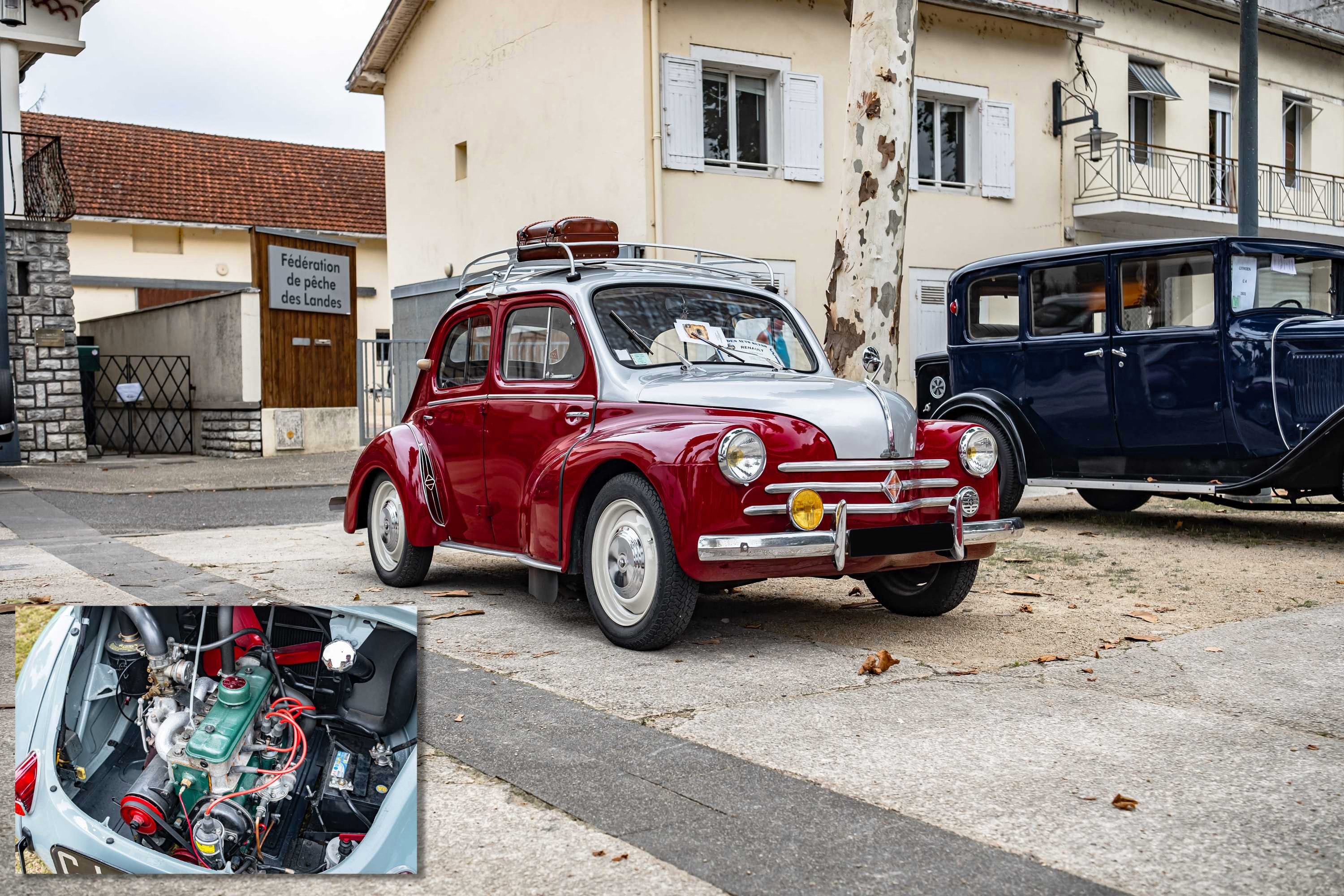
The post-war period saw the birth of numerous legendary engines, recognizable by their distinctive sound and exceptional durability. At the newly formed national company Renault, "the" Billancourt engine, also known as the B engine, made its appearance as early as 1947. The engineer Fernand Picard, who joined Renault In 1935, was tasked in 1940 with designing the engine of the Renault 4CV, the first popular car from the manufacturer. It was necessary to design an economical, robust, and compact engine. The specifications selected a water-cooled inline 4-cylinder engine, with a cast iron block, an aluminum cylinder head, and a three-bearing crankshaft. The first 760 cc version was launched at the same time as the Renault 4CV In 1947, however, the management quickly wanted to enter the small car into competition in the under 750 cc category. The bore was consequently reduced to achieve the 747 cc version.
Mechanical parts
Only 2 left in stock
The Billancourt engine continued its career on the Renault R4(discover the article: The 4L, the popular car that gives you wings) from 1961.
Mechanical parts
Only 1 left in stock
In 1971, an increase in bore size allowed for a capacity of 782 cc and two power levels: 27 hp on the R4 and 36 hp on the Renault 5 from 1972.
Small engine (Billancourt)
Out-of-Stock
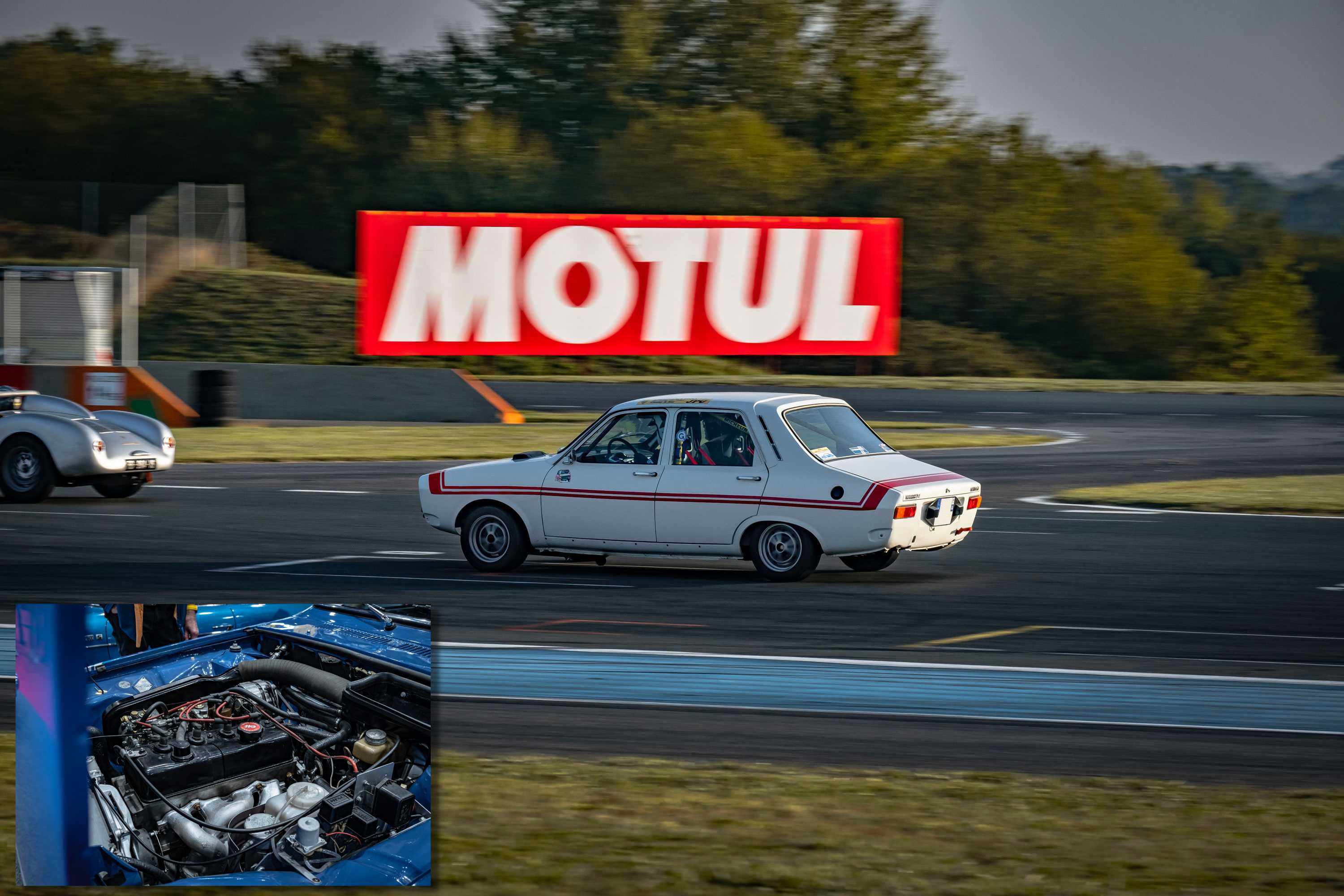
Although robust and solid, the Billancourt does not meet all needs. In the early 1960s, it became necessary to develop a more powerful and modern engine. The engineer René Vuaillat was tasked with this mission. He took the Billancourt engine as a base and modernized it by replacing the crankshaft with a new model featuring five bearings. It now rotates in a clockwise direction. Initially named "Sierra," it was quickly renamed after the name of its manufacturing plant. The Cléon engine, Type C was launched in 1962 for a long career under different configurations and in various cars.
It makes its debut as a 956 cm3 version under the hood of the Renault Florida S, presented at the Geneva Motor Show in 1962. In 1969, an upgraded version with 1289 cm3 and 60 hp was developed to equip the brand's first front-wheel-drive sedan, the Renault 12. It is then used on the rest of the range, notably on the Renault Estafette, the Renault 15, and even the aging Renault 10 in 1970. It offers sports performance in the Renault 5 LS in 1974, then is adapted for utility needs with the Renault Rodeo 6 in 1979.
Mechanical parts
Only 3 left in stock
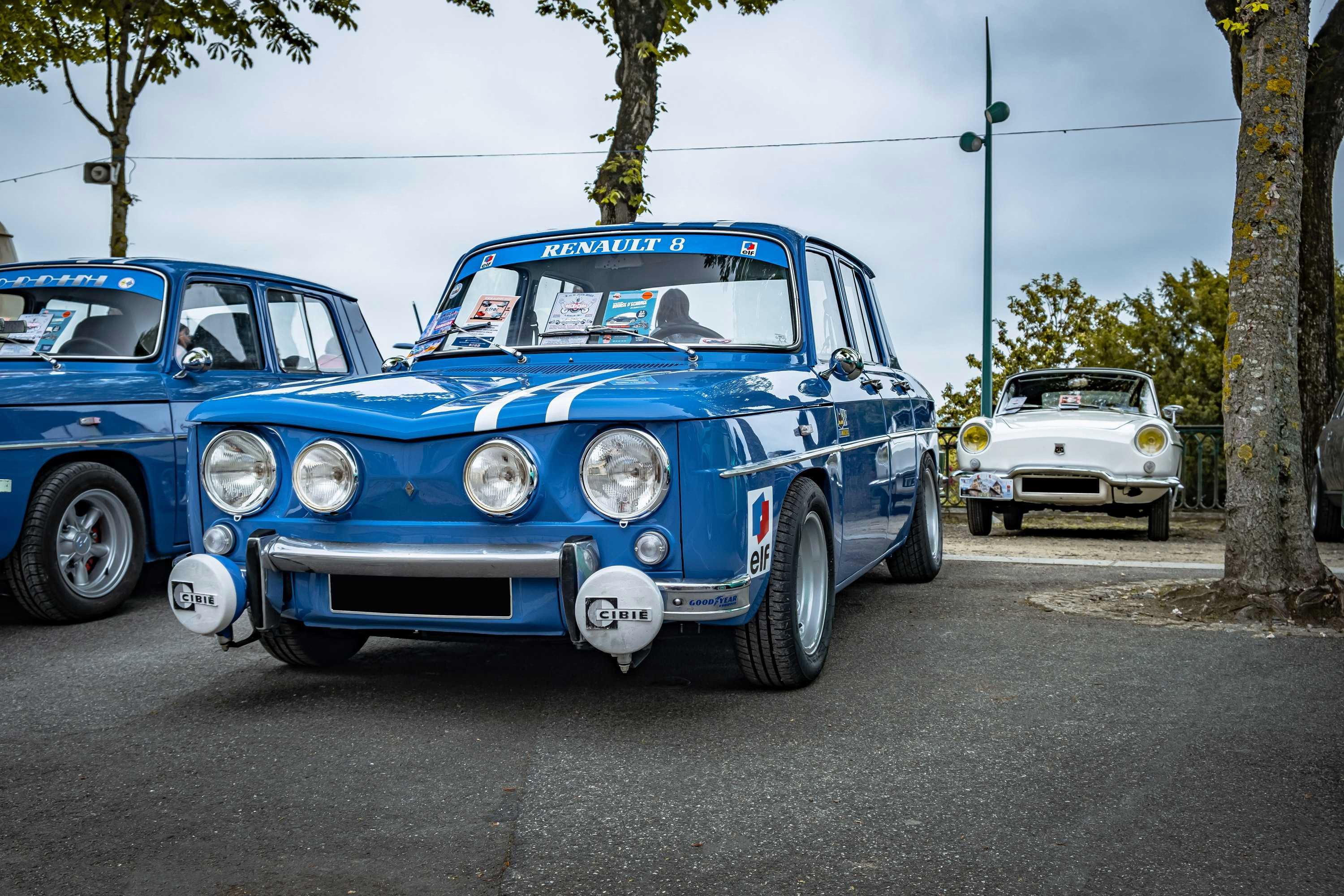
This engine, carefully born and balanced, becomes the darling of tuners, whose Gordini, which features what is considered the first small sports car in history, the Renault 8 Gordini. Faithful to the Cléon engine, it became even more sporty in 1966 with the 1300 version equipped with a 1255 cc 4-cylinder engine, allowing it to reach 175 km/h.
Mechanical parts
Only 2 left in stock
The firm with the "Arrow A" uses the Cléon engine in various projects, including the Cléon-Alu in 1605 cm3 with an aluminum base, used on the A110 1600S, then taken up again in 1971 on the Alpine A310.
Mechanical parts
Only 1 left in stock
Cléon continues its pursuit of performance with a new 1397 cm3 version prepared by Dominique Guérin for Alpine. During the oil crisis, small displacement sports cars are in high demand. Consequently, significant work has been done, including the addition of a hemispherical cylinder head and specific parts such as pistons, manifolds, and an adapted distribution system. It is initially installed in a naturally aspirated version on the Renault 5 Alpine in 1976, then in a turbo version inspired by Formula 1, with a carburetor upstream of the turbo starting in 1981 with the Renault 5 Alpine Turbo. You can find the shirt and piston sets for both versions.
Big engine (Cleon)
Only 2 left in stock
Big engine (Cleon)
Out-of-Stock
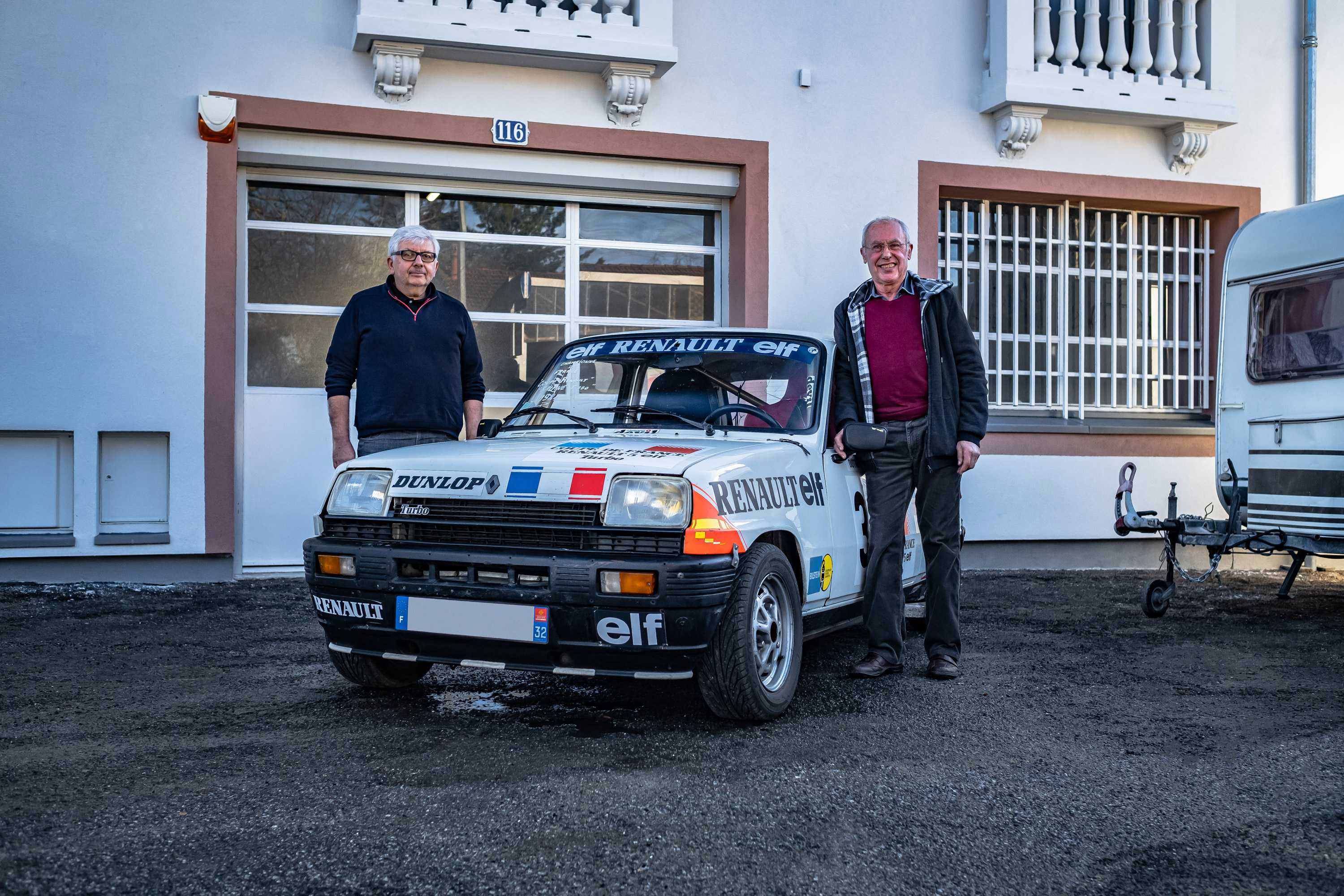
Shirt and piston sets for vintage models Citroën
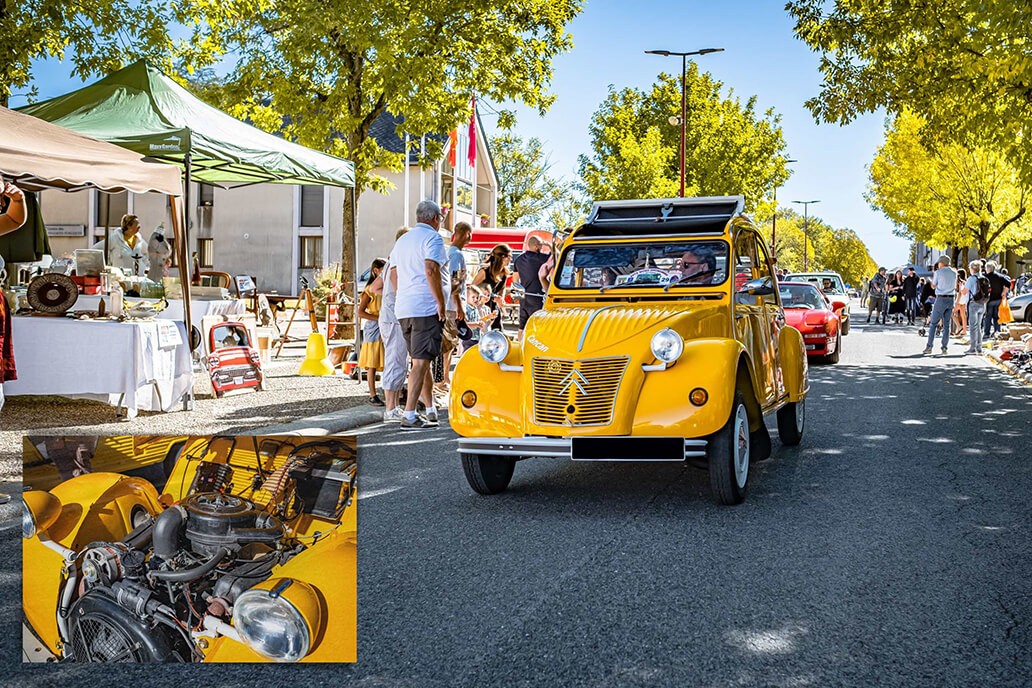
Renault was not the only one to manufacture legendary engines. On the side of its competitor, Citroën, "the" twin-cylinder has soothed the ears of the French for many years. The project began before the war with the TPV, a popular car that was to be powered by a robust, reliable, and economical engine. The outbreak of the war interrupted the project, but the needs were still present. Therefore, the research resumed during the occupation to result in the final project. The Citroën 2CV was eventually equipped with a flat twin-cylinder engine made from aluminum alloy, featuring air-cooling fins, cast iron cylinders, a two-bearing crankshaft, a central camshaft, gear-driven distribution, and hemispherical chambers. Modern, reliable, and robust, it was developed into numerous versions and powered many derivatives of the 2CV. Initially designed in a 375 cc version, it quickly evolved in response to customer demand, increasing to 425 cc in 1954 to reach 12 hp SAE.
Mechanical parts
Only 2 left in stock
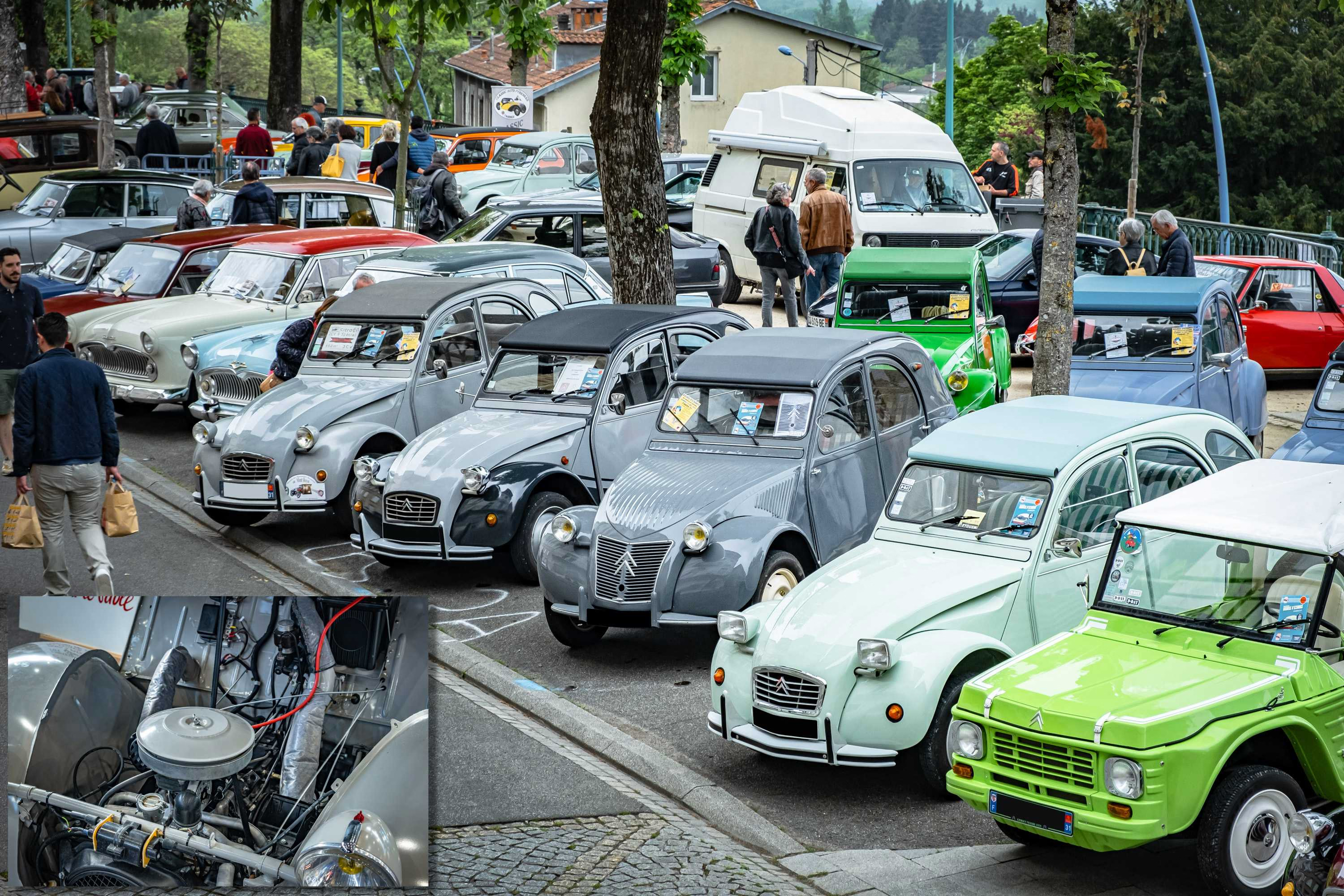
With the arrival of the Citroën Dyane to compete with the Renault In 1968, two new versions of the 4L were introduced: the Dyane 4 (435 cm3) and the Dyane 6 (602 cm3). We have the cylinder sleeve and piston sets for these two engines, which were also installed in the 2CV 4 and 2CV 6.
Mechanical parts
Only 2 left in stock
Mechanical parts
Out-of-Stock
Mechanical parts
Only 1 left in stock
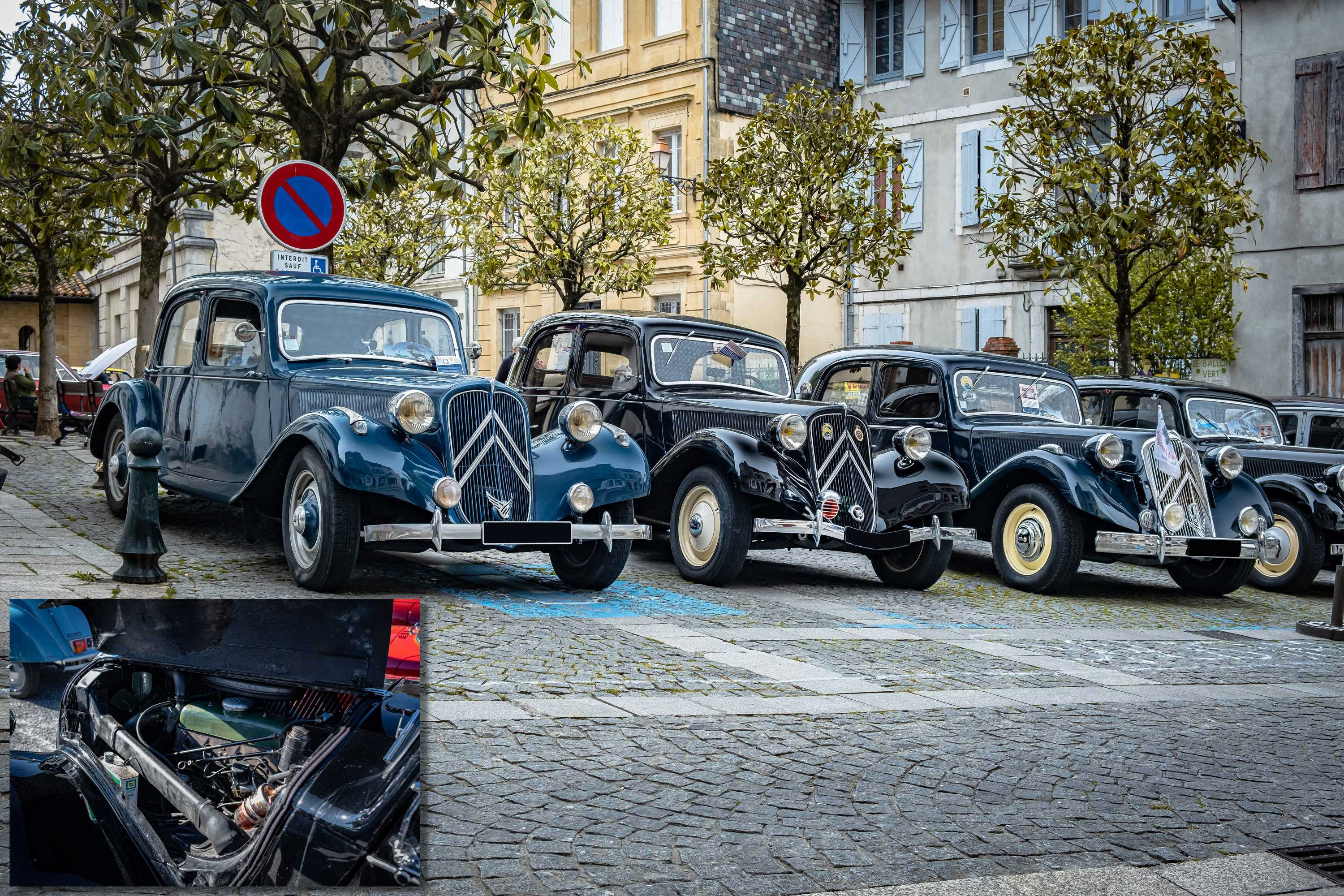
At Citroën, The period was marked by innovation. Just before the war, the Citroën Traction marked history by representing both the decline of the André era Citroën and the renewal of the brand with an increasingly innovative car. Under the hood of this sedan, several engines with different administrative power ratings were available: 7 hp, 11 hp, and 15 hp.
The 11 hp engine was developed from 1934 in its 1911 cc version. It was very modern for its time, with its cast iron block, side camshaft with overhead valves, and a high compression ratio for fuel savings. It underwent many modifications until the end of the life of the Traction in 1957. It was also used in the utility vehicle. Citroën HY.
In 1955, the latest evolution appeared with the Series D mounted on the first Citroën DS. The aim here was to thoroughly modernize the engine block of the Traction while keeping the same dimensions. It features a cast iron block cooled by water, an aluminum cylinder head, 8 valves with a crankshaft with 3 then 5 bearings, a side camshaft, and chain-driven timing. You can find the sleeve and piston set of this engine that equipped the DS and ID 19 here:
Mechanical parts
Only 2 left in stock
Shirt and piston sets for Peugeot ancient
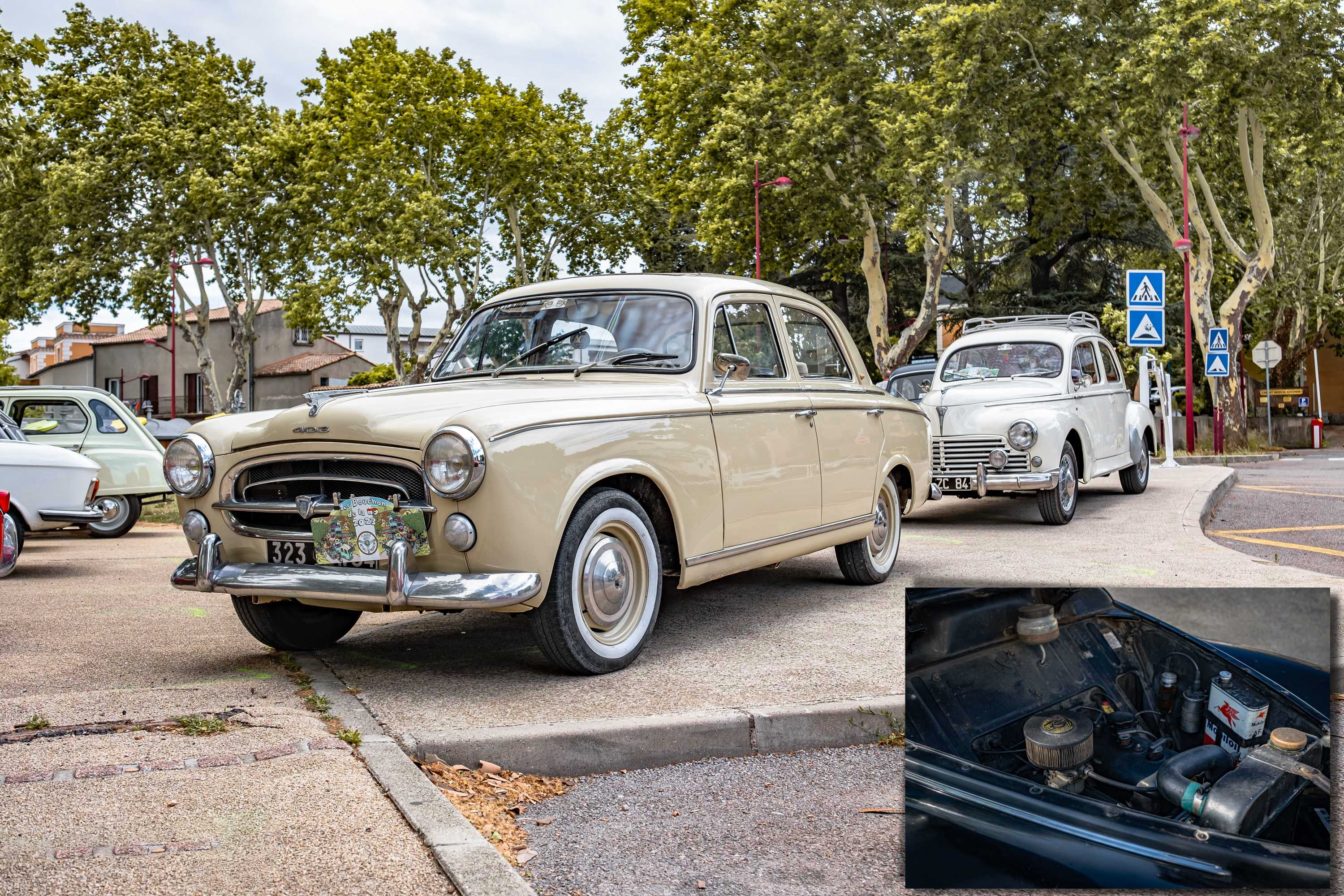
In the post-war automotive landscape, where market segments were distributed by the Pons Plan, Peugeot found himself having to design a car with 7 fiscal horsepower. Peugeot was inspired by the United States for the style of the new Peugeot 203 and developed a cutting-edge engine with its cast iron block, hemispherical chambers, and an Alpax cylinder head, which improves heat transfer. This unique 1290 cm3 engine accompanied the entire career of the 203, as well as the beginning of the Peugeot 403, before evolving into an 8 hp version. Many 203 and 403 models are still on the road, and if you want to bring yours back to life, we have the sleeve and piston sets corresponding to both versions.
Mechanical parts
Out-of-Stock
Mechanical parts
Only 3 left in stock
At the end of the 1950s, the design office of the Sochaux manufacturer began developing a new engine for the future Peugeot 404. As always, it is more of an evolution than a revolution for this 1618 cc engine. The block is made of cast iron, the cylinder head is still in Alpax, the camshaft is lateral with 2 valves per cylinder and a forged steel crankshaft. Initially with 3 bearings (XC), the engine adopted a 5-bearing crankshaft at the end of 1963 (XC5).
Mechanical parts
Only 1 left in stock
The engine code XC6 indicates the adoption of a new carburetor and a revision of the compression ratio to 8.3:1, while engines with a code starting with XCkF feature Kügelfischer mechanical injection.
Mechanical parts
Out-of-Stock
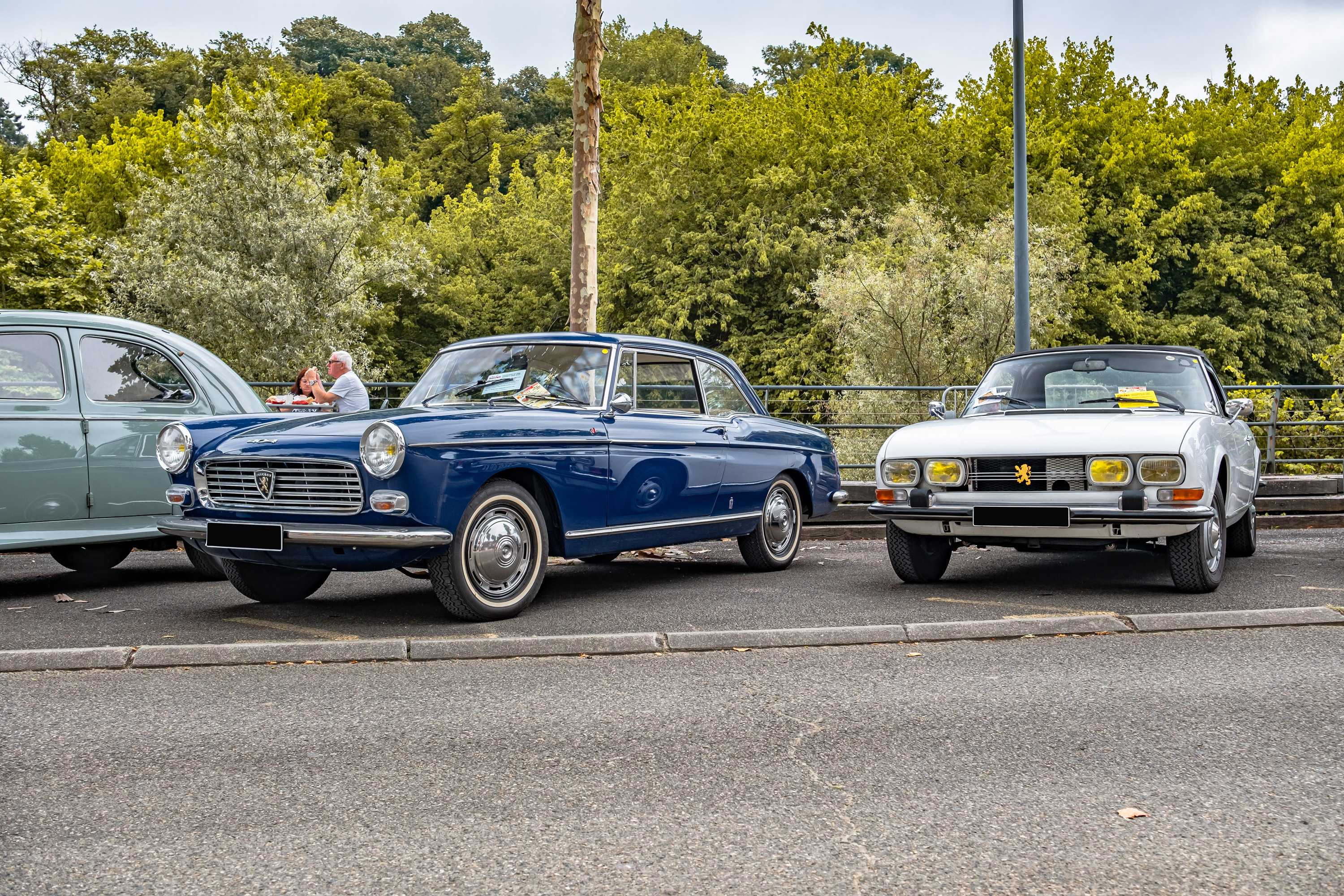
In 1970, the carburetor version evolved one last time (73 hp) under the code XC7 to equip the Peugeot 504 U and Peugeot J7 / J9.
Mechanical parts
Only 3 left in stock
During the launch of the Peugeot 504 - where you can find the story here: Part 1 and Part 2 - The 1.8-liter engine was merely an evolution of the one from the 404. As mentioned in the history, customers desired a more prestigious version, which led to the launch of the 2.0-liter versions under the XN code in 1970. We offer cylinder liner and piston sets for both the carburetor and injection versions.
This engine has also been used under other hoods, including the Peugeot 505 and the utilities Peugeot J5 and Citroën C25.
Mechanical parts
Out-of-Stock
In the meantime, the range Peugeot expanded in the 1960s with an innovative car, the Peugeot 204. This first front-wheel-drive passenger car from the manufacturer also introduced innovations in mechanics with the very modern XK engine made of aluminum alloy, overhead camshaft, chain-driven valve timing, and a gearbox/differential unit positioned under the engine for greater compactness.
Mechanical parts
Only 1 left in stock
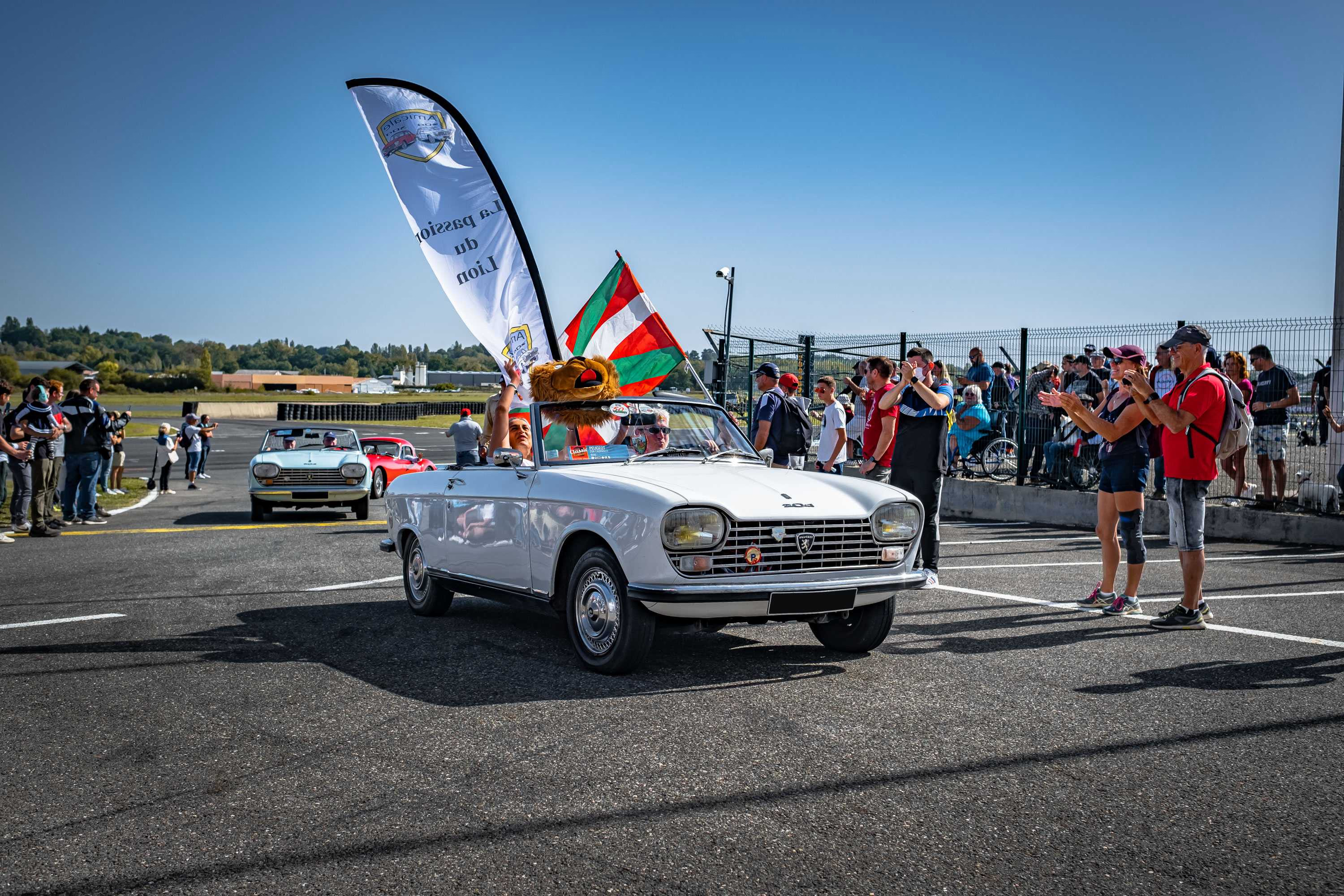
Finally, how can we not conclude with the "Rolls" of French engines, whose tumultuous history we discussed extensively in one of our articles (see V6 PRV: the best French engine ?). We are pleased to offer you sets of sleeves and pistons for the first version of the 2664 cm3 V6 PRV engine.
Mechanical parts
Out-of-Stock
It is with this roaring 6-cylinder engine that we conclude our tour of the iconic engines of the French automotive industry. Whether you are a fan of twin-cylinders, an enthusiast of engines Renault Cléon in cast iron or aluminum, or an enthusiast of mechanical innovation with the 4 cylinders Peugeot and Citroën, you will be able to rediscover the characteristic sound of these engines thanks to our various cylinder and piston kits.
Feel free to send us photos of your oldtimer that uses one of our parts. We are always delighted to see cars from our childhood back on the road.

 English
 Français