Shopping Cart
 Français

 English
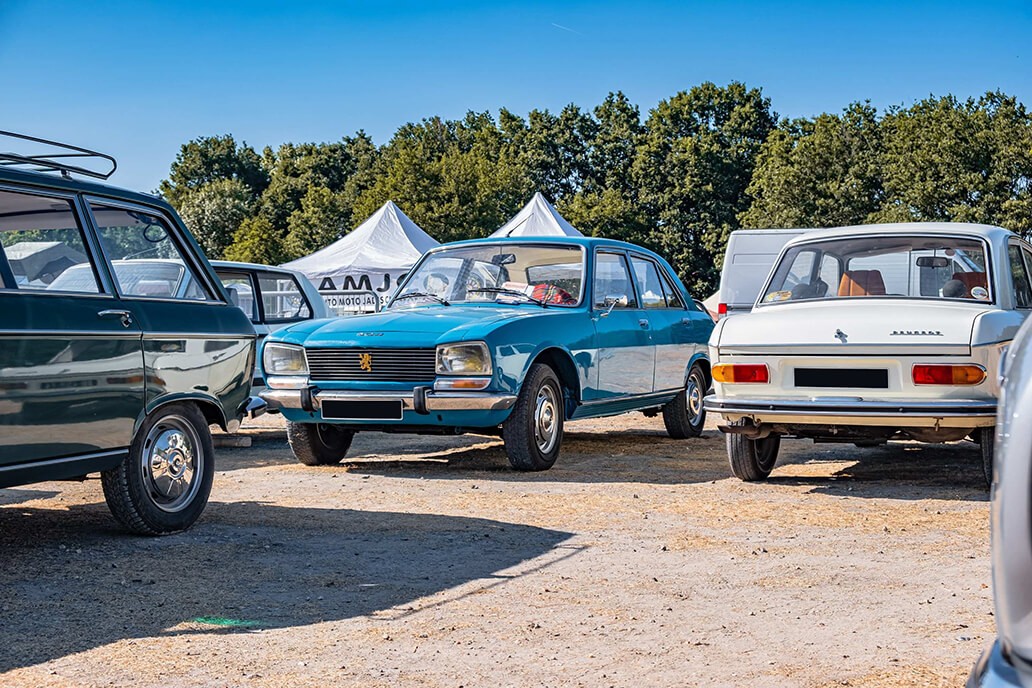
After a troubled genesis marked by social crises and a resounding start to his careersee the history of the Peugeot 504 Part 1), the Peugeot 504 reveals a few more of its secrets from a life marked by competition and commercial longevity.
In 1975, On the occasion of the retirement of the Peugeot 404, the Peugeot 504 underwent a slight facelift. which affected the grille, the headlights, and the interior, notably with the introduction of the foam-padded steering wheel. It was distinguished by its white indicators and recessed door handles.

The Peugeot 504 It attracted many households, as well as numerous businesses, whether private or public. Sales were boosted by taxi companies which, in 1975, had the option to choose a specific version equipped with an automatic transmission. In reality, this option was less popular than the manual transmission. Government bodies, such as the national police, chose the version dedicated to administration, which was offered starting in October 1974.


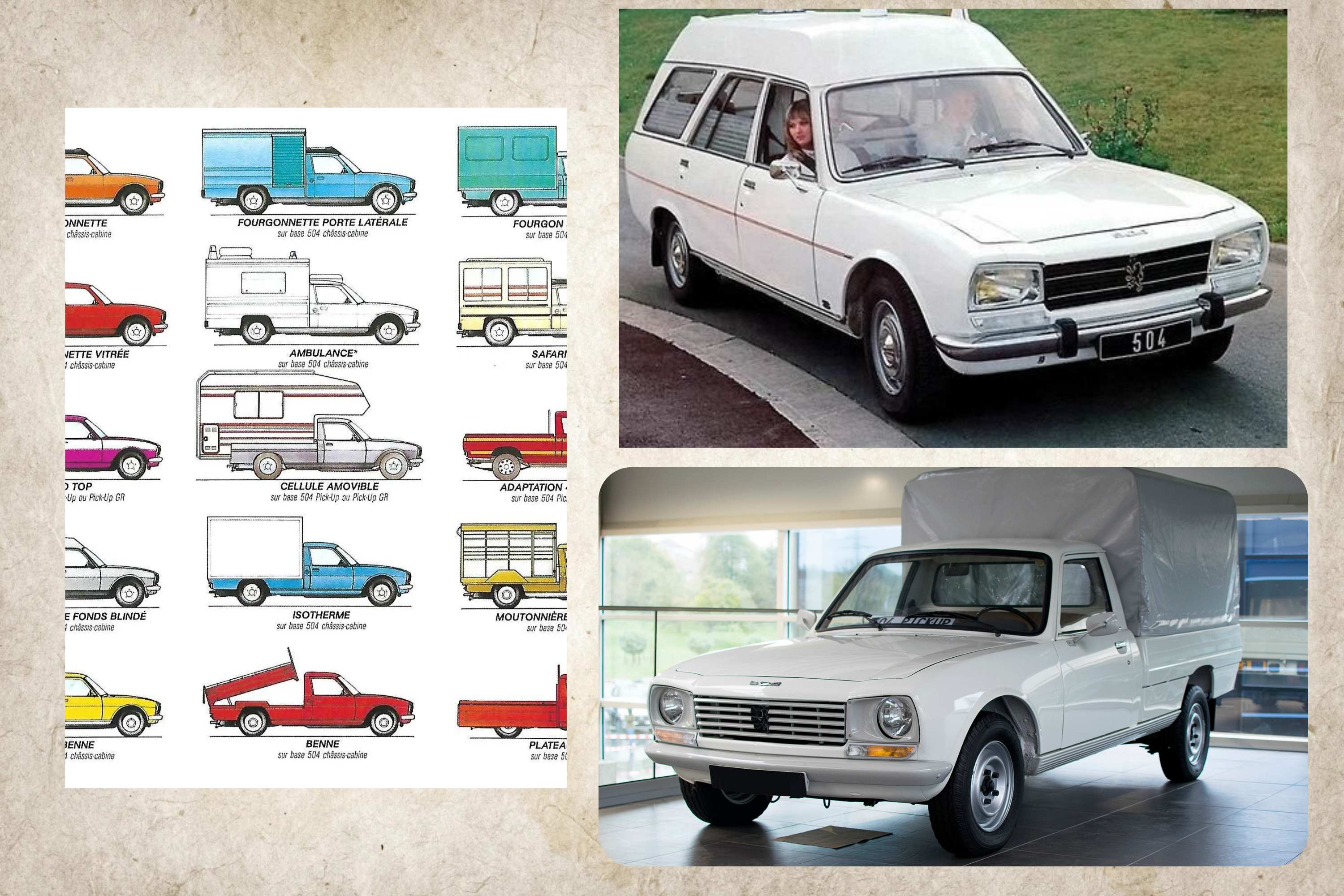
In addition to these official versions, Coachbuilders such as Durissotti and Heuliez offered an impressive catalog of variants that met almost every need.. The Peugeot The 504 simply holds the record for the diversity of models among French cars. This variety was accentuated by the launch of the pickup and the cab chassis in 1979. Customers could choose from a variety of configurations, including a hearse, an ambulance, an armored cash transport vehicle, a sheep transporter, an insulated version, and more. Be careful not to mistakenly transport a sheep in a hearse and a patient in an armored van.
These derivatives greatly contributed to the considerable success of the Peugeot 504, which reached the mark of 2 million copies sold in 1978.
From 1979, the range was simplified with the introduction of the Peugeot 505. That did not prevent the Peugeot 504 to offer an optional LPG kit in 1980. However, the Peugeot 504 eventually lost its popularity in Europe and was removed from the catalog in July 1983, well before some foreign markets.
The Peugeot 504, more than any other car from the manufacturer, played an essential role in the international reach of the brand and in the conquest of new markets. An impressive figure demonstrates this characteristic, with more than two-thirds of the 504 exported. It traveled across continents, from Europe to Africa, passing through Asia, North America, and Latin America. It was either produced locally, assembled from kits, or simply imported from France.
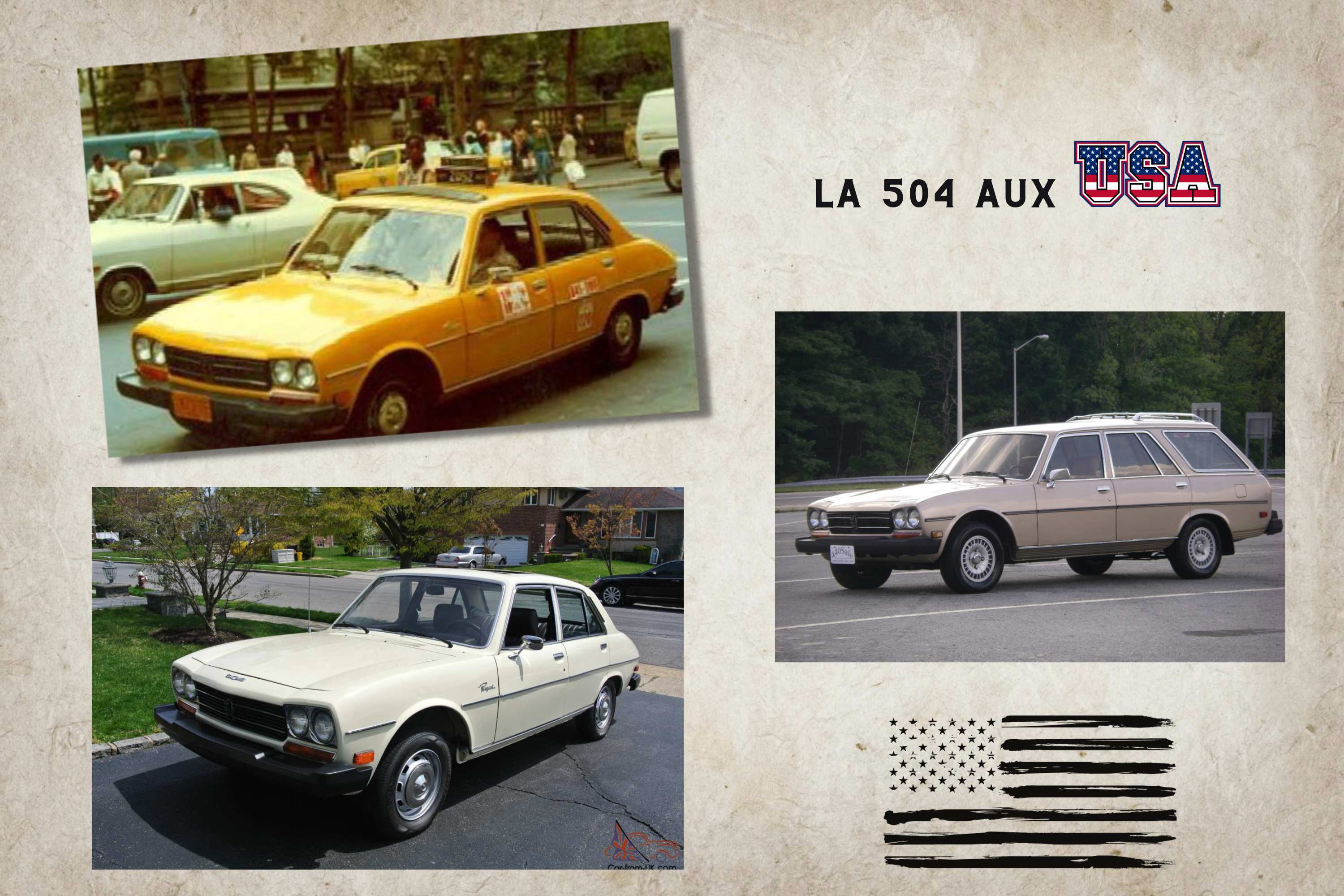
From the beginning of her career, the Peugeot 504 undertook to conquer the United States in a specific version recognizable by its two round headlights, prominent bumpers, and the side indicator repeaters. It achieved a certain level of success, particularly among taxi drivers.
In China, Specific versions of station wagons and pick-ups were assembled through joint ventures. These models were distinguished by their interior, which could accommodate 4/5 passengers, and their rear bed.
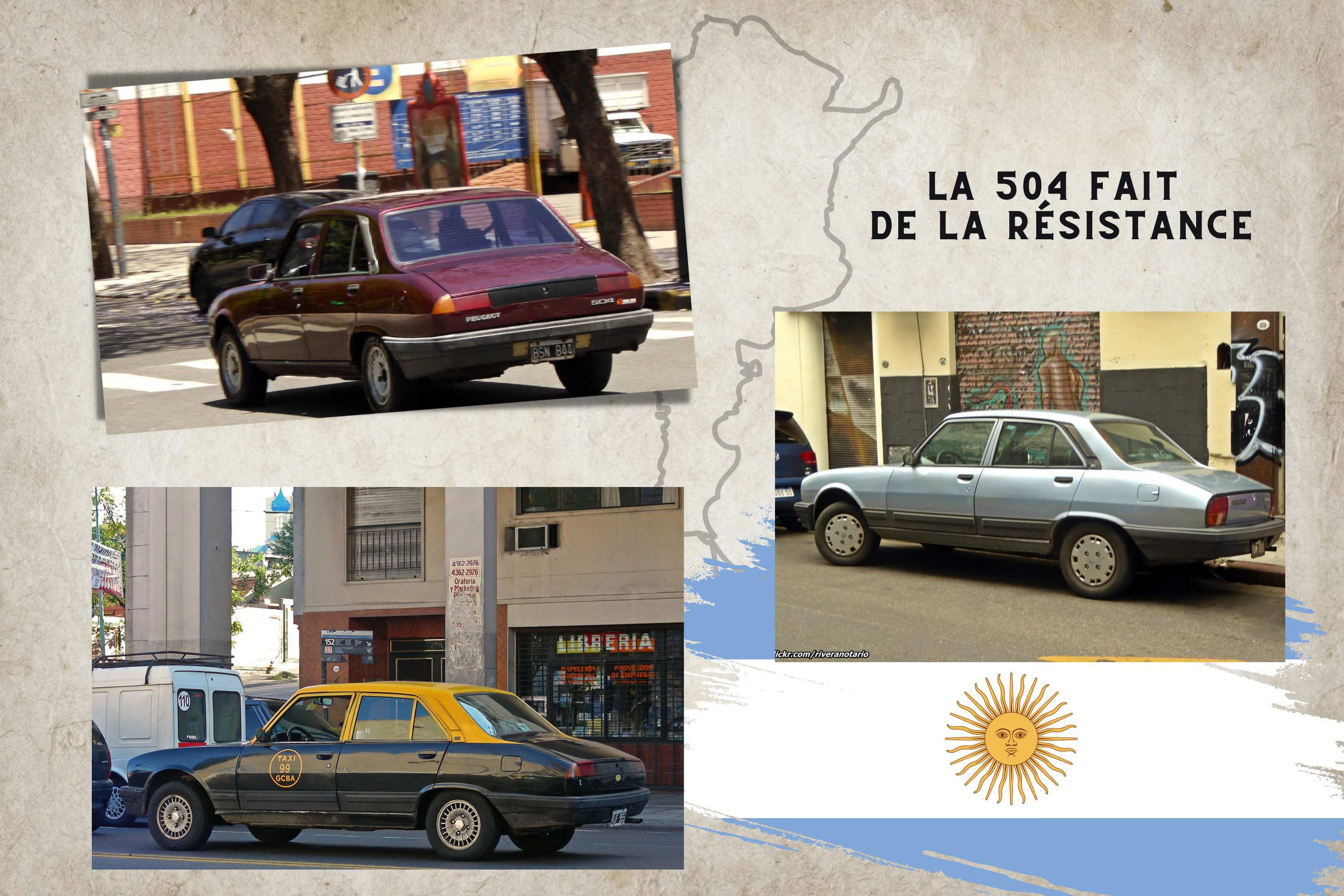
In Latin America, particularly in Argentina, the Peugeot The 504 became an icon by being produced directly on site.. Its reputation for unwavering reliability made it a very economical car, reassuring in a country marked by numerous economic crises. The 504 managed to adapt to the local climate with a rigid axle and increased ground clearance. As it was gradually leaving French dealerships, it underwent a significant facelift there, fully integrating into the 1980s with its wraparound plastic bumpers and redesigned headlights. In 1990, the 504 underwent another major transformation initiated by Pininfarina., significantly altering the appearance of its rear end. The lights have been raised and are now horizontal. Who could have imagined in the 1960s that the sturdy 504 would still be on the market in the 1990s? She has become a true symbol, nicknamed "el Yeyo". Despite its popularity, Peugeot took the reins in the country and ended the marketing of this "504 of the 1990s" in 1998.
Despite the years, the Peugeot 504 had not said its last word on its favored territory, Africa. Marketed in all corners of the continent, she contributed significantly to strengthening the already excellent reputation of the Peugeot in Africa. Neither the absence of roads nor the extreme weather conditions could hinder the endurance of the 504, which made a name for itself thanks to specific versions such as the "bush taxis" introduced in 1975, but especially due to its performance in competitions.


In the 1960s, Peugeot had already impressed the local minds by repeatedly winning one of the most demanding car races, The East African Safari. "The" Peugeot 404 had shone and demonstrated their robustness during this decade. The 504 had to follow in the footsteps of its predecessor in the Sahara dunes. The first Peugeot 504 was therefore engaged in 1970, alongside three others. Peugeot. She managed to step onto the last spot on the podium, between the hands of Shankland and Rothwell.
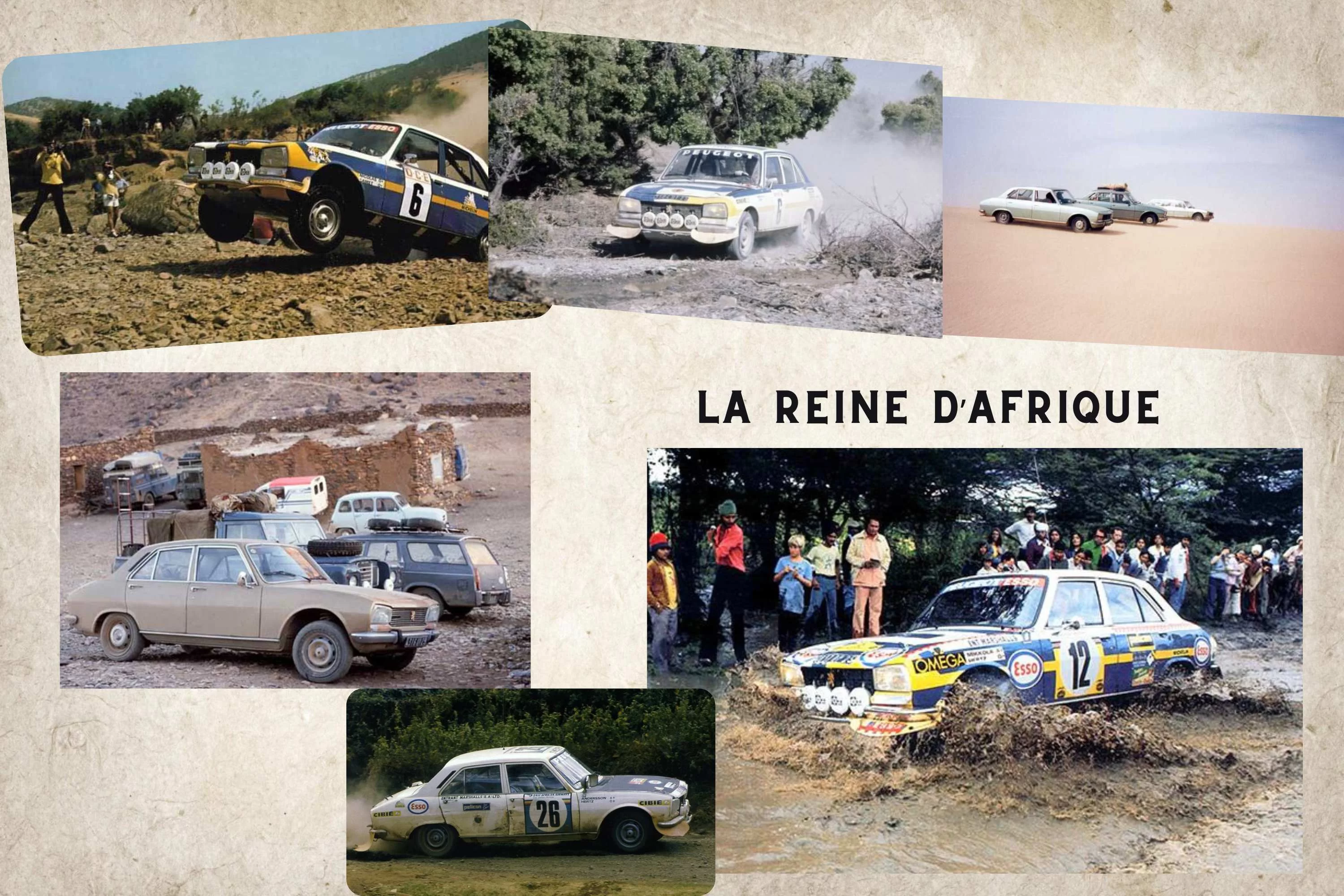
In 1971, she still did not achieve victory in this prestigious race and once again finished in third place, but the Peugeot The 504 shines elsewhere in Africa, winning first place at the Ethiopian Highland Rally, the Madagascar Rally, and the Bandama Rally in Côte d'Ivoire. The latter was even won four times by a Peugeot 504.
The same year, the Team Aseptogyl was founded, promoting the participation of female drivers in numerous rallies. The first cars entered were Peugeot 304 and 504.
The year 1973 marked an important milestone in rally history with the creation of the World Championship. This event prompted the manufacturer to create its first racing department., who also took over the African rallies previously supervised by the local importer, Marshall's. The teams also evolved, with the arrival of European drivers such as Andersson and Todt.
In 1974, three Peugeot 504 They stood on the podium at the Morocco rally in the "series production touring" category. The 504 continued to accumulate victories, notably winning the "Total Rally" in South Africa and the Tanzania rally.
The crowning achievement came in 1975 with a historic treble. The Peugeot The 504 simultaneously won the Morocco Rally, the Bandama Rally, and the Safari Rally (formerly the East African Safari). These victories earned it the nickname "Queen of Africa". There was no better advertising campaign for the car.
This legend continued to be written until 2002 in Kenya and even in 2005 in Nigeria, where some Peugeot 504 were still assembled from kits produced in France.
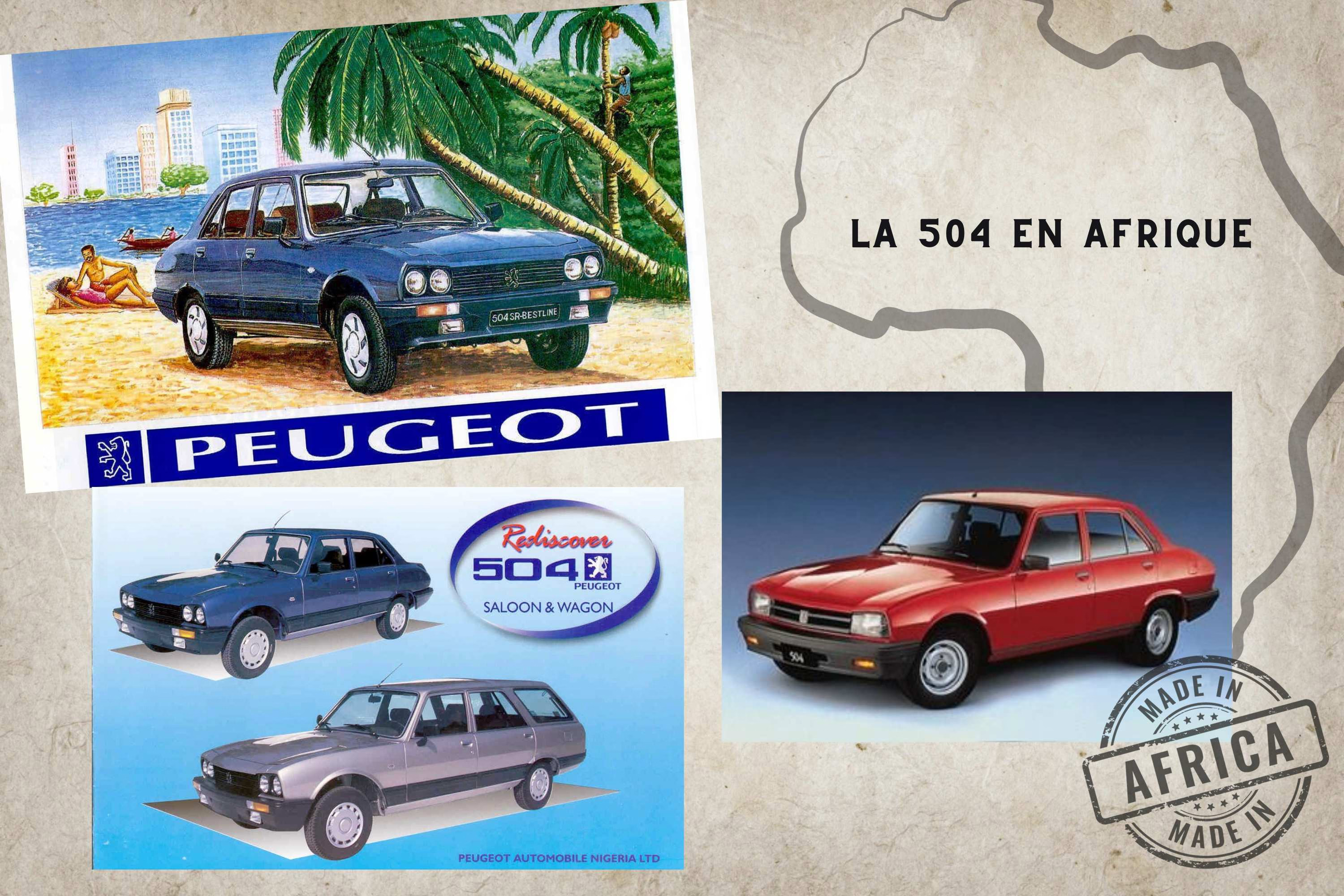
An exceptional longevity for a car of this category. This serious bourgeois sedan has evolved to become a true Swiss army knife, just as comfortable in upscale neighborhoods as in the most remote regions of the globe. It has provided numerous services to administrations and businesses and has experienced thrills through numerous competitive engagements. A rich and varied life that ended very late, in 1996 for the pick-up and even in 2005 for the sedan in Africa. In total, 3,711,556 units were produced, including all versions. The 504 is truly an iconic part of the history of Peugeot.
