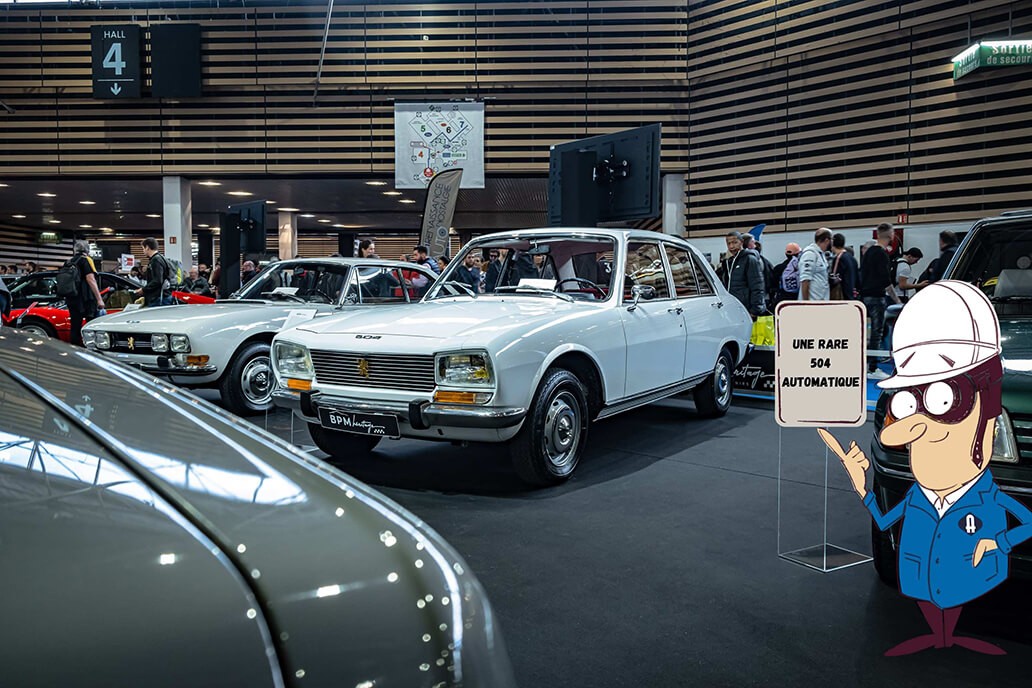
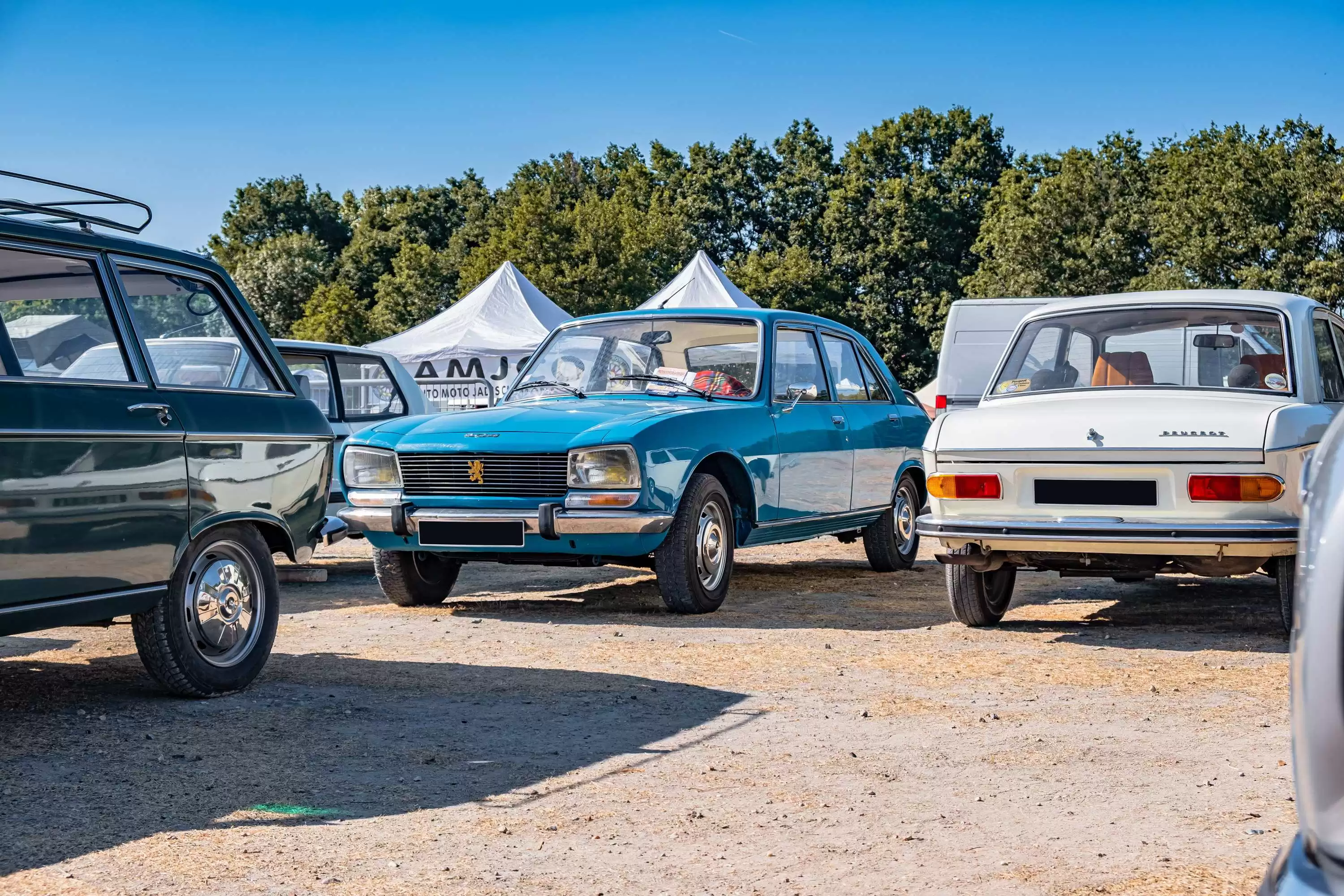
Ah, the 1960s, a period full of promise that ushered in a new decade of growth and post-war recovery. Years marked by economic carefree spirit that would set the stage for an unprecedented revolution in social norms. A revolution, also latent, was brewing among Peugeot. This small provincial manufacturer had always relied on a single model. In 1960, the Peugeot 404 had taken over from the Peugeot 403, which itself had succeeded the Peugeot 203, but this executive sedan was not truly revolutionary compared to the Citroën DS, released five years earlier. The brand's leaders eventually understood that it was necessary to innovate to endure. A first revolution occurred in 1965 with the introduction of a second model in the range, the Peugeot 204. Behind this small lioness with an innovative yet somewhat classic design was a unique traction architecture, featuring a transversely positioned engine. A breath of fresh air swept through the company. Peugeot, which was going to continue innovating slowly but surely with the future replacement of the Peugeot 404.
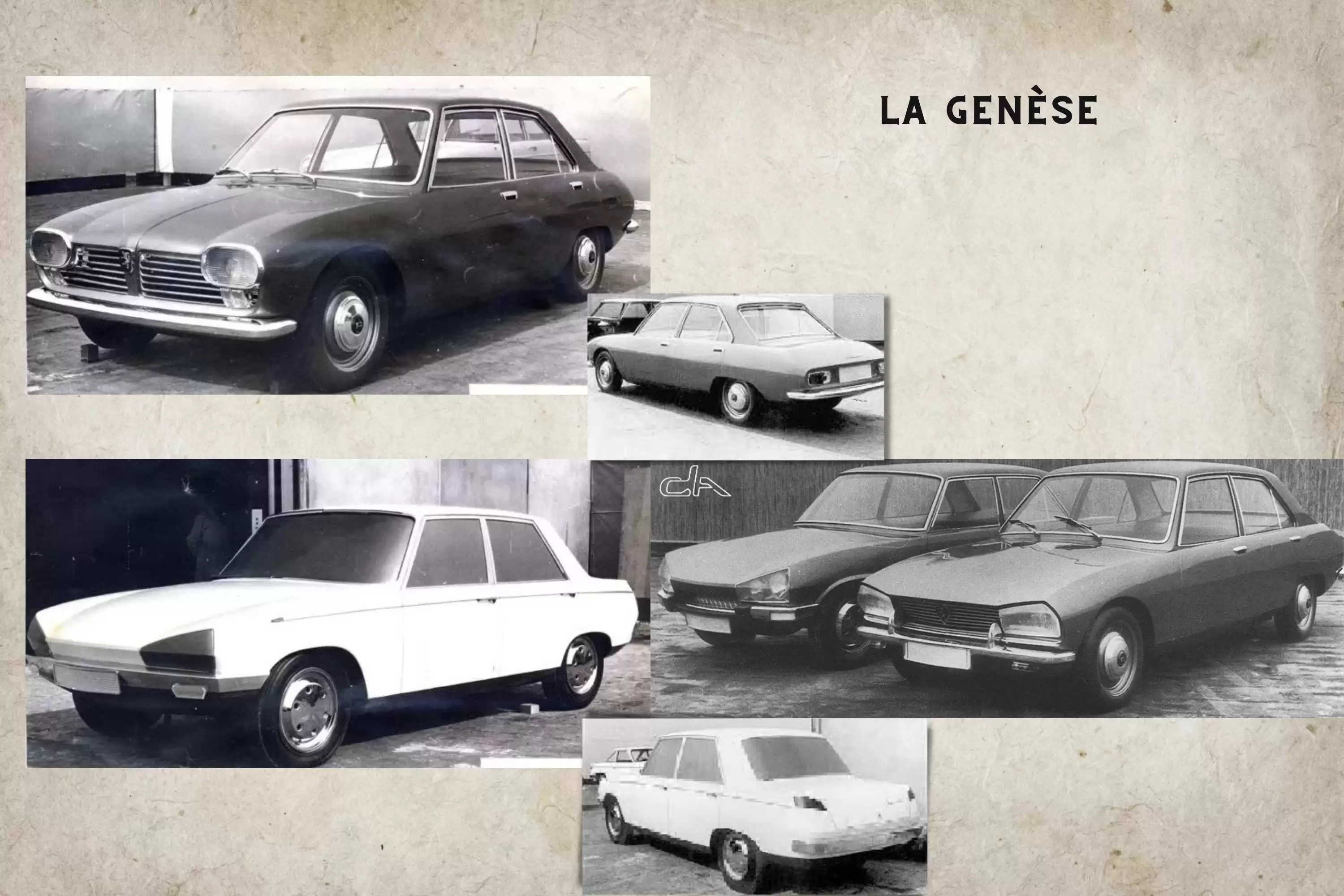
The genesis of the Peugeot 504
The study of the new flagship sedan began in 1963 under the leadership of Maurice Jordan, who was then head of the company. In keeping with the tradition initiated since the Peugeot 403, , A design competition was organized between Pininfarina's office and the internal design office.. As early as 1964, the two models were compared. Pininfarina's proposal already reflected the main features of the project, particularly with a unique design of the trunk. The front adopted lines inspired by American cars of the Peugeot 204. On the other hand, the proposal by Paul Bouvot and his team, composed of Gérard Welter and Jean-Pierre Prodeau, seemed less revolutionary. The rear, inspired by American design, remained more classic. As for the front, it was more innovative with new shapes for the headlights that were to be nicknamed the "eyes of Sophia Loren." Was it love at first sight? The final project eventually adopted a compromise between the two proposals, with a front end featuring the internal style and a rear end designed by Pininfarina.
The new sedan, which was not going to be named 405 as one might have expected, was named 504 to mark a clear evolution in its features. Its design reinvented the stylistic identity of Peugeot while remaining imbued with seriousness. The more massive lines and increased dimensions gave it a new dynamic. The break at the trunk level became a distinctive feature, setting it apart from the competition. This Peugeot 504 established a new standard that would inspire future projects in the range.
Moderate technical developments
On the technical side, it was out of the question to rely on past achievements, even if the platform and engines of the Peugeot 404 were preserved. Here too, the emphasis was on smooth transitions. If the shift to traction had proven wise for the small Peugeot 204, The engineers continued to prioritize rear-wheel drive for the 504. However, improvements were necessary to ensure safer handling. The engineers decided to abandon the old screw axle with a rigid axle in favor of a independent four-wheel trailing arm suspension system, equipped with a differential suspended under the hull. This small technical revolution was also accompanied by the adoption of four disc brakes for maximum safety, because yes, safety was becoming an increasingly crucial issue, with the implementation of crash tests aimed at studying deformation in the event of a collision. The Peugeot The 504 thus made its entry into the modern era with a deformable structure and an ejectable windshield.. Inside, she also took her first steps into the plastic era, with a dashboard that was simple but carefully crafted.
Braking
Only 2 left in stock
Rear axle
Only 6 left in stock
Shock absorbers
Only 4 left in stock
Regarding the engines, the changes were more measured, offering the possibility to choose, like the 404, between a carburetor version (87 hp) or an injection version (103 hp) of the 4-cylinder Kugelfischer engine, which was bored out to 1796 cm³ for the occasion. With these developments, the 504 reached the category of 10 fiscal horsepower, making it a car of a certain prestige.
A tumultuous exit from the Peugeot 504
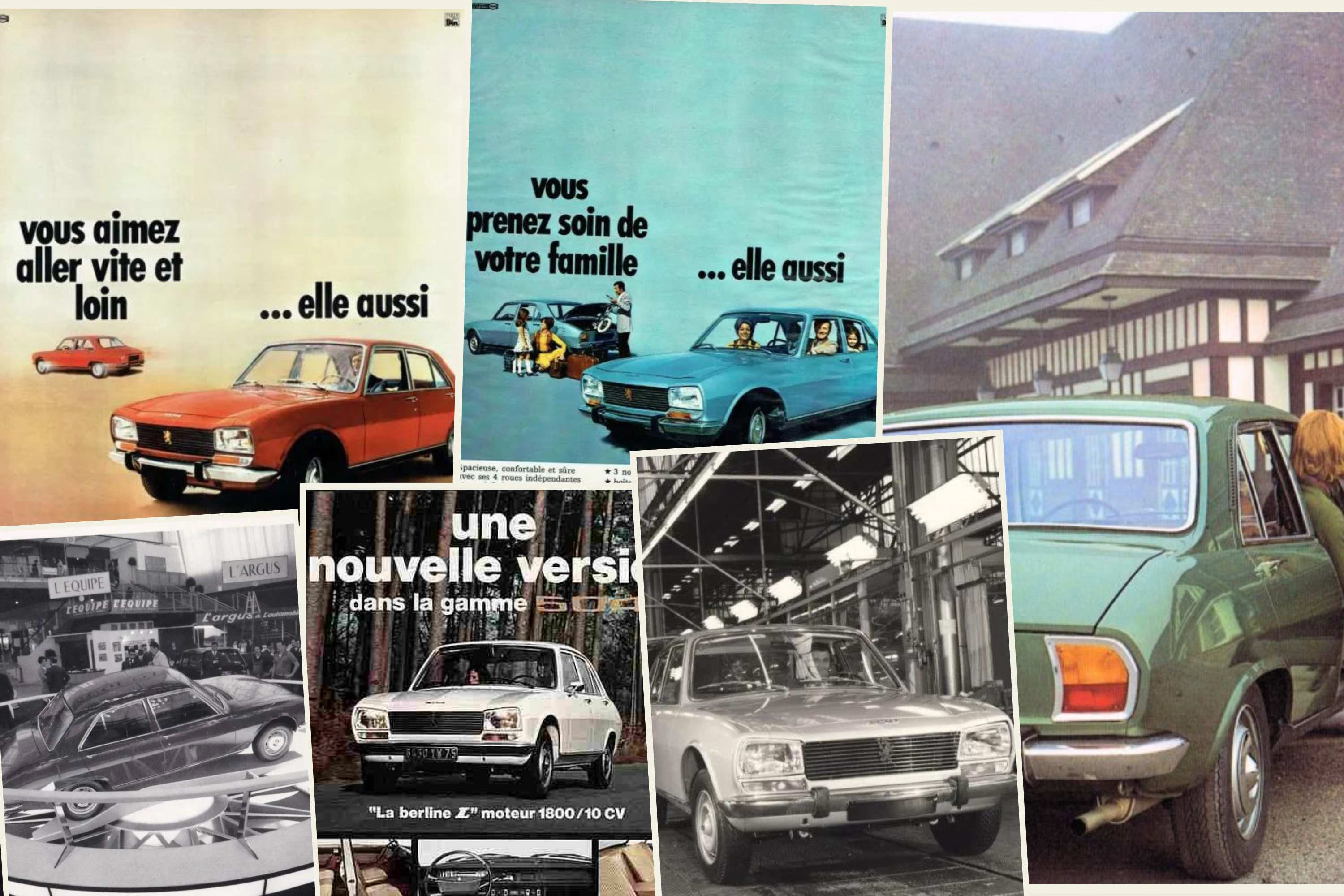
This car, revolutionary on a scale of Peugeot, was going to experience further upheavals in a tense social context at the end of the 1960s. Starting in 1966, strikes disrupted production at the factory of Peugeot. The social movements even spread to the offices of the different services, but this did not have a major impact on the schedule planning for the model's release in June 1968. However, the story took a decisive turn with the vast... social movements of spring 1968, driven by the youth of the baby boom, who aspired to a freer and less traditional society. The Sochaux factory was paralyzed, and The release of the 504 was postponed to September 12. of the same year. Upon its unveiling, the 504 elicited mixed reactions due to its distinctive trunk design. However, this new lioness, despite its modern appearance, did not yet suspect that it would achieve resounding success for many decades.
The beginning of a long success
In 1969, the career of the Peugeot 504 was propelled by the title of "Car of the Year". The same year, Peugeot celebrated the production of its 5 millionth car since 1890, and it was, of course, a Peugeot 504. It was also at that moment that the highly coveted coupe and convertible versions of the 504 were unveiled.read the article there Peugeot 504 coupé: a commoner in an evening dress).
For the anecdote, our official mascot, Roger, had the opportunity to try the very first Peugeot 504 sedan gasoline delivered in the Gers, at Auch. This car belonged to one of our clients, a CEO of a large construction company. As for the founder of ALEPOC, Christian, he was not yet old enough to take the wheel at the time, but he has very fond memories of the comfortable backseat that accompanied him to Montauban.
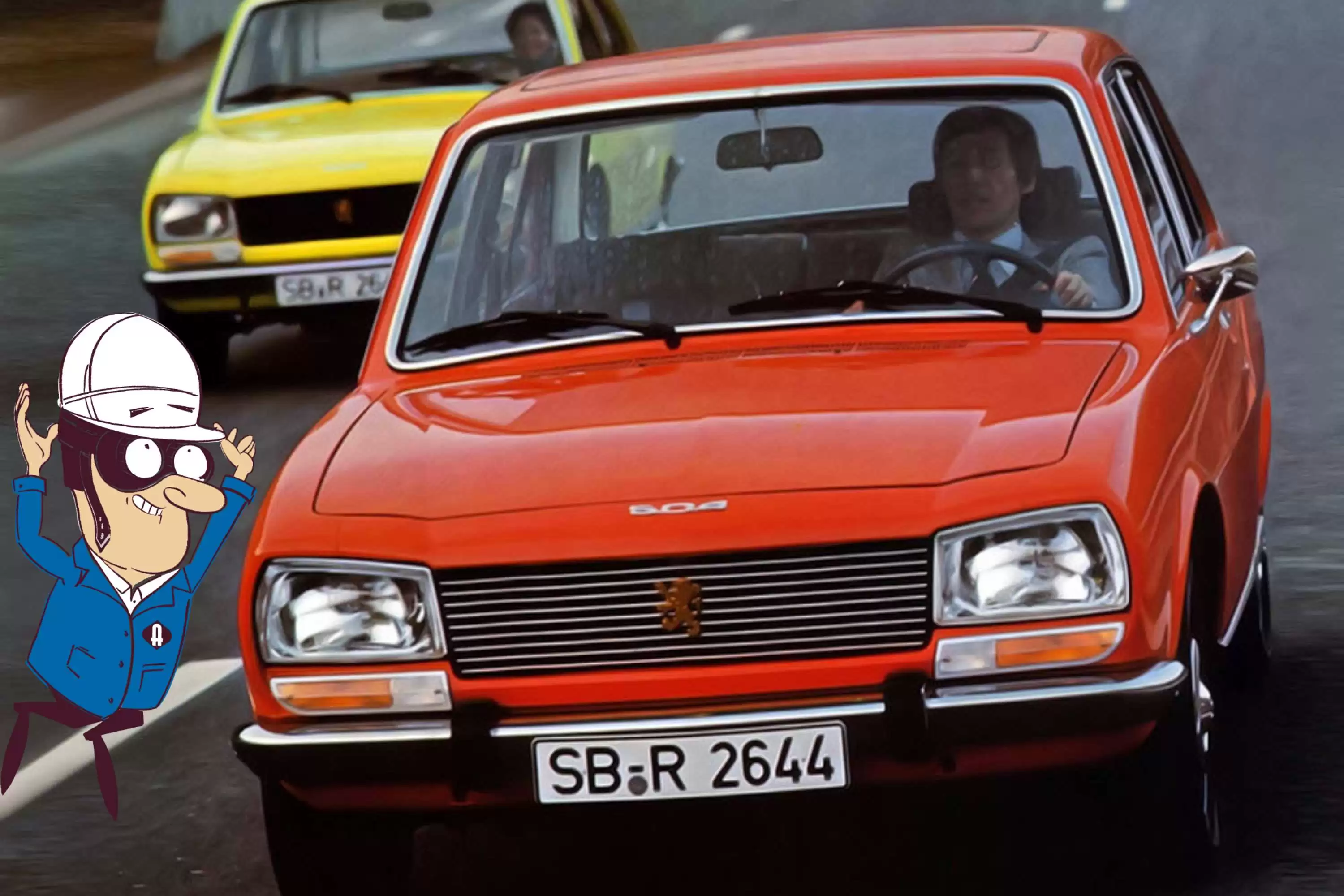
The Peugeot 504 has not completely replaced the Peugeot 404, continued to be offered in the catalog in more streamlined versions. It gradually evolved to meet the different expectations of customers. First of all, she played a key role in the rise of diesel in France. The history of this type of motorization at Peugeot It dates back to the 1930s, with experiments on commercial vehicles. It wasn't until 1958, with the introduction of the Indénor engine manufactured in Lille, that a concrete offering appeared on the market. Initially, the 504 adopted a 2112 cc diesel engine producing 65 hp. This economical and robust engine significantly contributed to the 504's reputation. By 1975, no less than 65% of diesel car sales in France were Peugeot 504. An impressive figure !
Engine seals
Only 6 left in stock
In 1971, the gasoline range was enriched with more prestigious 2.0-liter engines. That same year, the extended versions were introduced, with a wheelbase lengthened by 16 cm and a total length increased by 31 cm. These versions abandoned the new modern axle to return to the rigid axle of the 404. The range was available in commercial, station wagon, or family versions.Read the article on the saga of station wagons. Peugeot).
In 1972, the 504 injection was renamed TI to emphasize its sporty character. During this same period, the gear lever and handbrake were moved to the floor for a more dynamic driving experience.
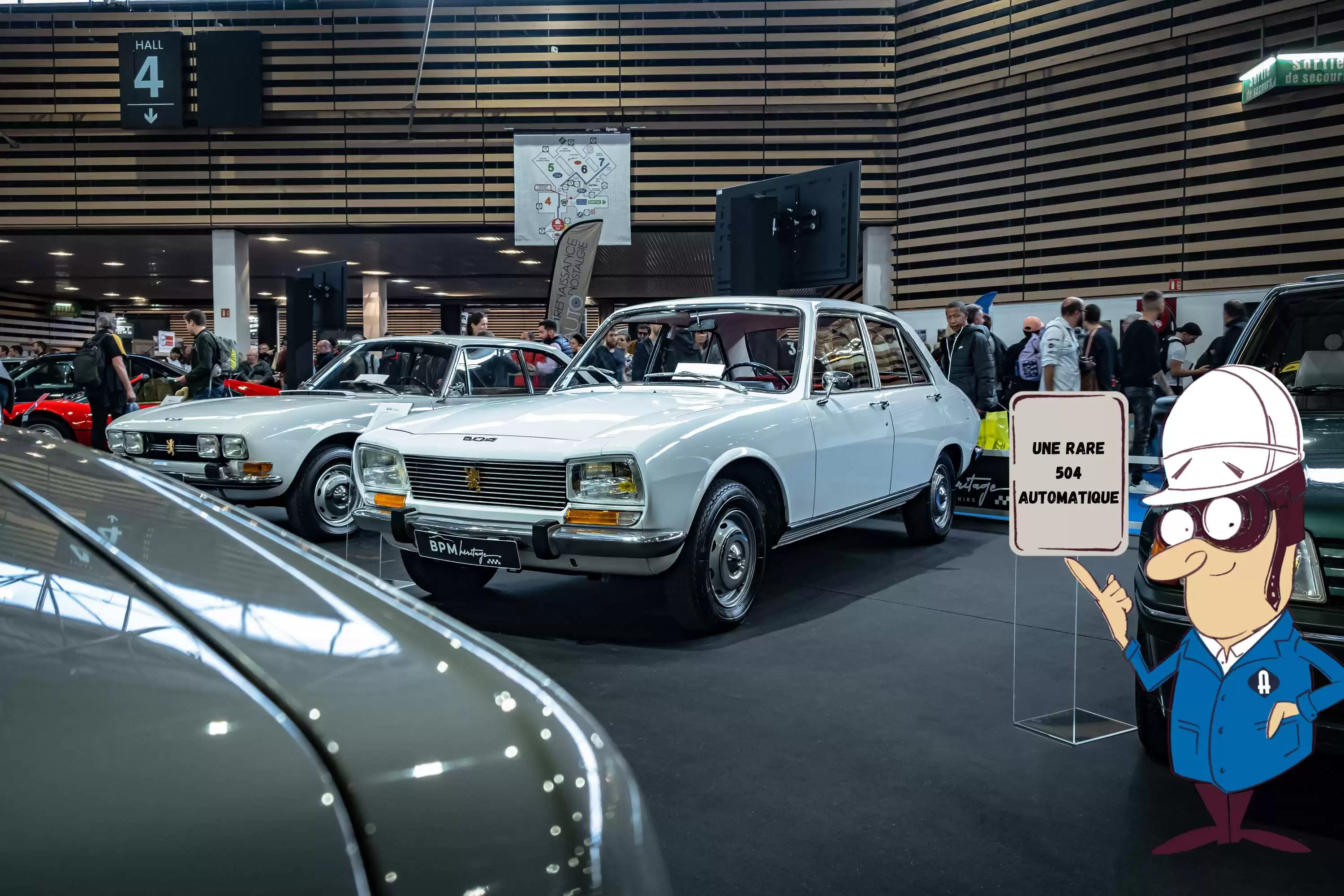
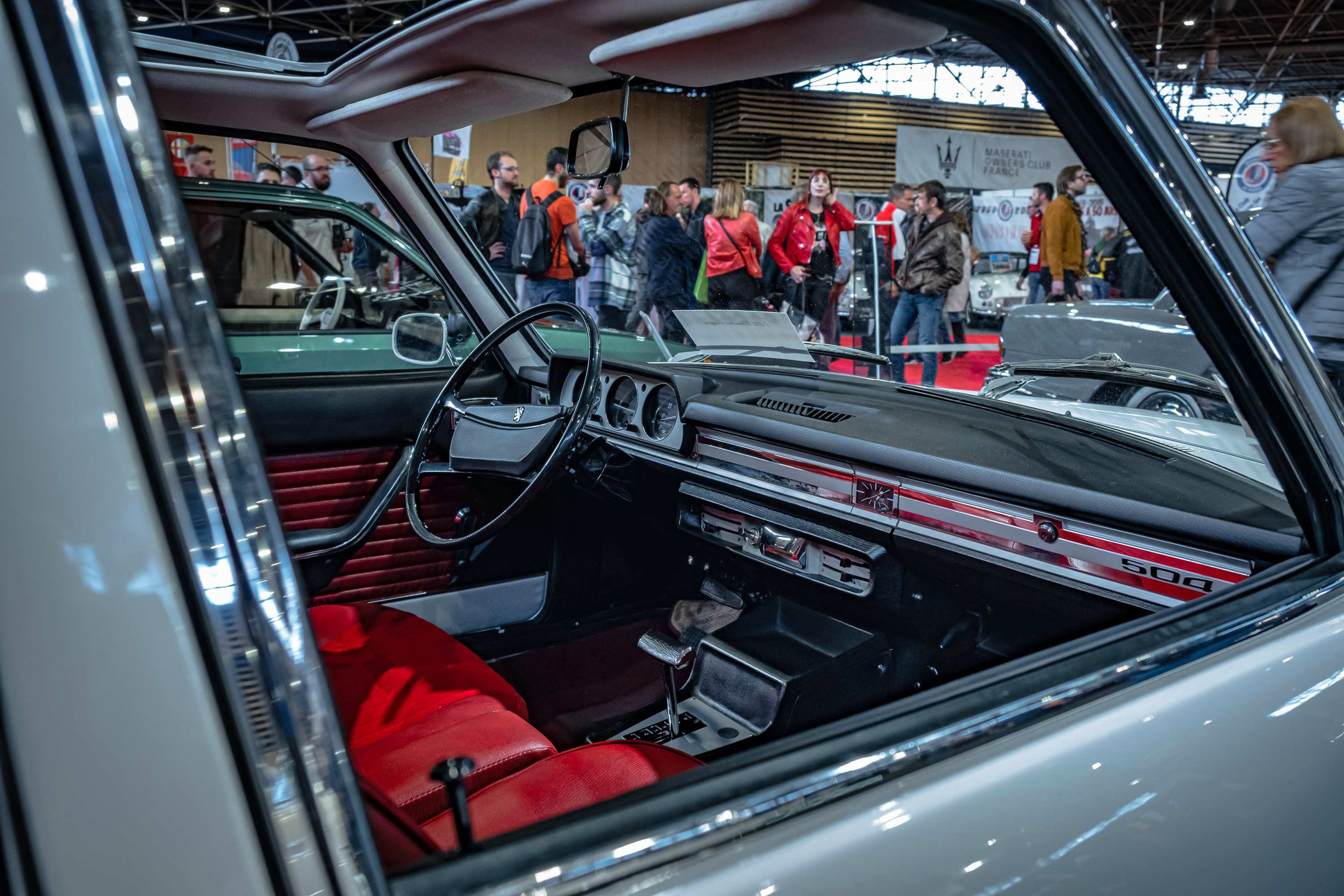
In 1973, a "light" version was introduced, equipped with the older gasoline and diesel engines from the initial marketing phase. It was simplified technically by reverting to a rigid rear axle and rear drum brakes. It was distinguished by a more streamlined dashboard, with the gear lever returning to the steering wheel. Externally, it was recognizable by the absence of chrome and the removal of bumper stops.
Braking
Only 2 left in stock
That same year, the Peugeot The 504, which was not necessarily destined for success, propelled the manufacturer to the top of private national manufacturers, with an annual production of over 650,000 cars. The 504 sets an internal production record for a single model, with 222,000 units produced in one year..
In 1974, the V6 PRV (read the article: the best French engine ?) made its appearance, but only on the coupe and convertible versions. It was decided not to offer it on the sedan in order not to overshadow the future Peugeot 604, which will be unveiled a year later.

 English
 Français