
Shopping Cart
 English
 Français
Taking a break behind the wheel of a Peugeot: the story of family cars
In 2019, Peugeot celebrated the 70th anniversary of a rather special car body: the station wagon. This spacious and practical body style has been a favorite for many families and merchants, sometimes at the expense of comfort. What mattered was the size (of the trunk), and Peugeot gradually succeeded in democratizing station wagons in Europe and around the world. ALEPOC I propose to trace the history of these great cars with a thousand and one stories.
The beginnings of breaks
The history of station wagons Peugeot is a bit older than what today's marketing teams are trying to make us believe. The name "break" was first used at Peugeot on a carriage named Peugeot Break, built in 1894 at the same time as the first prototypes of automobiles Peugeot. The automobile then developed and markets began to take shape. In the interwar period, like many manufacturers, Peugeot developed many utilities from classic sedans. The Peugeot 202 did not escape the rule with a development that took these particular bodies into account upstream. It was in the summer of 1939 that the small Peugeot is equipped with a body named "Commercial Familiale." Available in 4 or 6 seats, it had only a short career with the outbreak of war in Europe in September 1939. The solution was found with a raised roofline, an extended length, and an enlarged cargo space. At the end of World War II, industrial tools had been looted, and raw materials were scarce. Peugeot began producing 202 wood-bodied station wagons, in the style of American woodies, named Limousine Commerciale and nicknamed Canadienne, starting in October 1946. Only 3,000 units were produced in an artisanal manner before industrialization took over with the introduction in 1949 of the company's first mass-produced station wagon. Peugeot : the Peugeot 203 Break.
Discover our spare parts for Peugeot 202

The first break Peugeot
The sedan extends by 18 cm and gains 100 kg to offer 4 seats in the Commercial version or 6/7 seats in the Family version. The Commercial delights merchants with its payload of 450 kg, and the Family version captures the hearts of bourgeois families who finally find a car capable of transporting their entire group. However, one must choose between transporting passengers or luggage, which leads to the adoption of a roof rack on most of the Peugeot 203 Family. The space on board is made possible thanks to a change in the suspension system, which switches from coil springs to a rigid axle with longitudinal semi-elliptical springs. The station wagon is only in its early stages, and its more common image will emerge much later. In 1956, the Peugeot 203 break leaves the production lines after 25,218 units.
See our spare parts for Peugeot 203
The success of breaks Peugeot
In 1956, the 403 was equipped with its own station wagon version, also available in Commercial and Family variants. The wheelbase was extended by 24 cm, and the design was refined with an elegant third side window. The load capacity increased to 500 kg for a maximum volume of 1.6 m3 with an interior height of 90 cm, allowing room for any type of hat on one's head. Practicality remained a priority, although some aspects were somewhat neglected, such as the engine, which remained unchanged from the sedan version. The 1468 cc inline 4-cylinder engine with 58 hp struggled to pull the additional 200 kg. Therefore, engineers reduced the gear ratios for more responsiveness. This Peugeot403 Family follows in the footsteps of its big sister, having sold 21,966 units by the time it left the production lines in 1962.
Our spare parts for Peugeot 403

When there is no more, there is still more. Peugeot has accustomed its customers to discovering a station wagon body with each generation of sedans. The recent 404 is no exception and follows in the footsteps of the 403 with its own stylistic codes and an increased length of 19 cm. It is available in three versions to meet all needs: Commercial version with its 5/6 seat configuration, the estate version which is a more luxurious commercial model, and the family version with 7/8 seats at the top of the range. The 404 improves and advances in user comfort. The Peugeot The 404 is the first station wagon to be equipped with a tailgate. practical, with a modern suspension featuring coil springs and brake assistance on certain models. In terms of engines, it offers more choices, although fuel injection is only available on the sedan and the coupes/convertibles. The brand introduces for the first time a diesel engine on a station wagon, following a successful experiment with Parisian taxis using the Peugeot 403. Depending on the years, we will find the famous Indénor engine in 1816 cm3 or 1948 cm3. It has a bird-like appetite for fuel with remarkable reliability, making it the perfect engine for entrepreneurs. The improvements made to the range and comfort were reflected in sales, with nearly 400,000 station wagon versions produced. This success led to Peugeot to adapt its recipe for lower segments with the Peugeot 204 break in 1965. This little lioness revolutionized the brand with its independent wheels, disc brakes, and front-wheel-drive architecture. It was equipped with a compact but very spacious station wagon body, providing 1.5 m3 of loading volume for the van. The 204 station wagon is therefore the brand's first front-wheel-drive station wagon in history, and in 1968 it even featured the smallest mass-produced diesel engine (1255 cm3).
Discover our spare parts for Peugeot 404
To echo the new, more upscale 304, the 204 station wagon was equipped with a similar front end in 1971. The Peugeot 304 break is therefore a disguised 204 station wagon since nothing else changes. It is even the smallest of the 304s, being 15 cm shorter than the sedan. Strangely, the 204 and 304 station wagons will coexist until 1976.
Browse our spare parts for Peugeot 204AndPeugeot 304

The first 4x4 station wagon
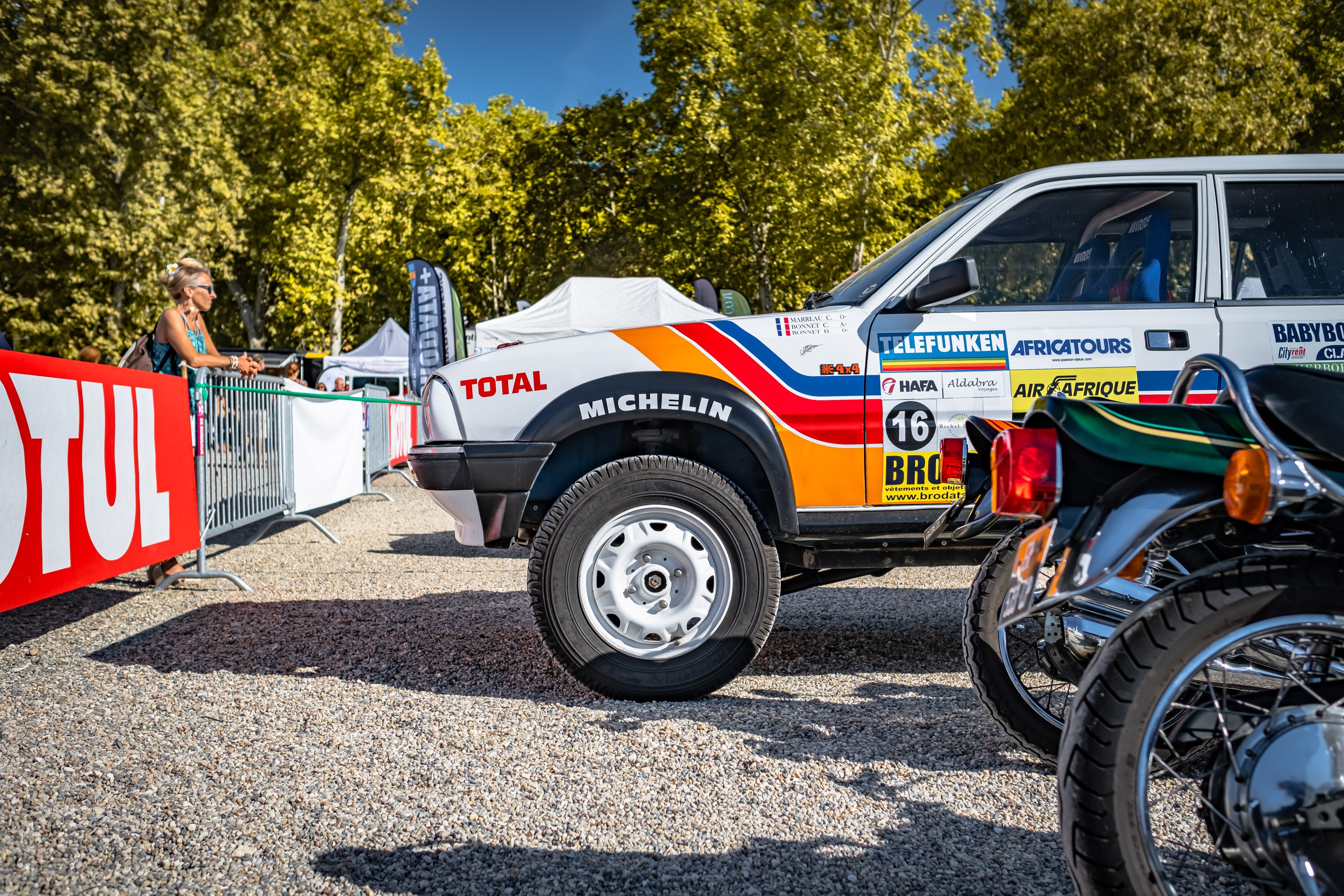
In 1971, the new major sedan Peugeot 504 It also transforms into a station wagon with a wheelbase extended by 16 cm, resulting in a total increased length of 31 cm. The style is slightly different, with a more visible junction of the rear part on the roof. The Peugeot 504 is available in the Commercial, Break, and Family versions.. A robust car that will shine, along with the sedan, worldwide and shape the image of Peugeot. In 1981, she completely broke new ground with the transformation carried out by Dangel in a GR 4x4 station wagon. This is the first collaboration between the recent Sentheim firm and Peugeot. A story that continues to be written even today. In 1983, the 504 left the French market, but it continued to be produced until 2005 in Kenya.
See our available spare parts for your Peugeot 504

Upscaling of station wagons
At the beginning of the promising 1980s, it is the number 5 that takes a break. In 1980, it is the 305 that gets a backpack with underpinnings of Peugeot 204 modernizeddiscover our spare parts for Peugeot 305). Success is not really achieved compared to the sedan, with only 250,723 units sold over 9 years. On the other side of the range, the 505 introduced a station wagon variant in 1982 with a loading capacity of 590 kg and 1.94 m3. This large station wagon has definitively left behind the rustic nature of early station wagons by being more luxurious and comfortable. The GTI letters even have the right to appear on the tailgate of station wagon versions with the 2.2-liter 4-cylinder engine producing 130 hp. A very rare version, just like the Dangel conversion which is continued for administrations and adventure-seekers. Like other station wagons Peugeot previously, the 505 sets out to conquer the West to attract a clientele fond of this type of bodywork. The 505 will also be adopted by taxis in major cities with its reliable and fuel-efficient diesel engine, while the Peugeot 505 break will integrate into the lives of families. Americans will have access to a Turbo version named 505 Turbo SW8 for "8-seater station wagon." A designation that would be found much later in Europe. This version might be the ultimate station wagon. Peugeot Traditional by being the last to be offered in rear-wheel drive.
Discover our selection of spare parts for Peugeot 505

The last break Peugeot
This is followed by a whole series of station wagons where almost every new car is almost always given a station wagon version. The Peugeot 405 break continued the lineage in 1988, followed by Peugeot 306 and 406, which will be the last models labeled as "station wagon." The Peugeot 206 inaugurated the trend of small station wagons, just as the 204 did in its time, with the new designation SW for "Station Wagon." At present, it appears that Peugeot has already released its Last break in history with the 308 III SW. A model that would never have come to fruition without the demand from the German and Italian markets.
The breaks Peugeot have therefore greatly contributed to the manufacturer's image after World War II by contributing to the economic development linked to reconstruction, as well as the baby boom which increased the number of children in families. Many generations have memorable memories of traveling in these station wagons or daily memories with the companies that used these cars. It is a rich history that is unfortunately on the verge of disappearing. These are cars that need to be urgently preserved.
Published on
17-05-2023