
Shopping Cart
 English
 Français
Citroën Type H

Summer is ending, and you've returned. Your old car is in the garage, and you can still hear the ticking of the engine as it cools down. But you feel the urge to set off again. To travel for a long time, on the roads around the world, and with a French car, because we know you're a bit patriotic. So the Citroën Type H is made for you !
This is not a TUB

We start by arguing... but it's actually about being precise. Like the moped or the refrigerator, a name was used to refer to something similar.
In the case of our good old Citroën Type H, it was nicknamed TUB or Tube. Alright, but actually the Citroën TUB did indeed exist! Released in 1939, it took the engine from the Traction 7 and its appearance was nothing like that of the Type H. Hardworking, it carried 850 kg of payload and was soon supported by the TUC with the Traction 11 engine.
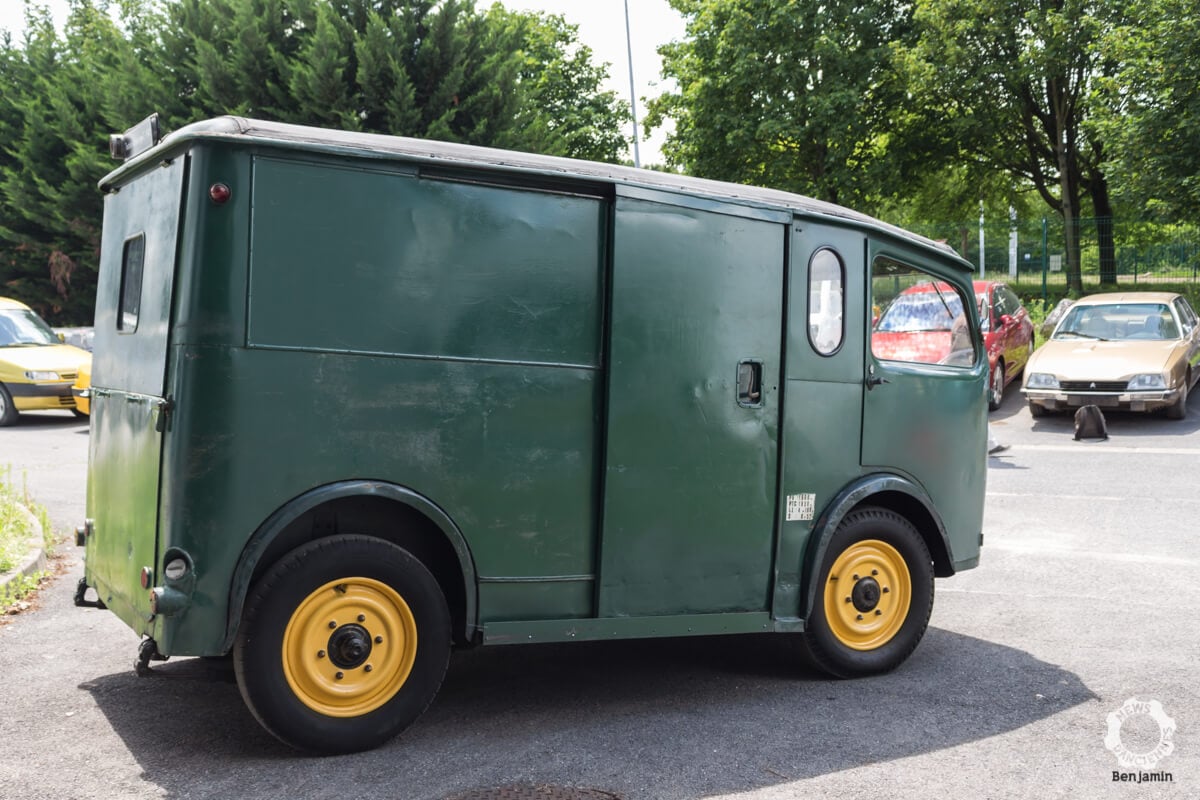
Except that the production of these two vehicles was hindered by the war, and neither sold more than 2,000 units. Seen this way, it's quite surprising that the name has remained.
But let's return to our French van to travel to the ends of the earth.
The beautiful career of the Citroën Type H

After the war, two utility vehicles with a similar appearance are studied at Citroën. These are the G and H projects... and they will give their names to the utilities. The G will never make it to the roads. Smaller than the H, it is powered by a 2CV engine. A bit limited, therefore.
The Type H uses the 1638 cm³ engine... from the TUB! In fact, there are many borrowings from the Traction since the front axle is that of a 15, the steering wheels, mirrors, and door handles are also sourced from the queen of the road. As for the shape, it is not a stylistic project that equips it with corrugated sheets. They are actually much more rigid, a real advantage for a unibody van. Released in 1948, the Citroën Type H is immediately appreciated. The fact that it is a front-wheel-drive utility vehicle indeed provides a large loading volume at the back and, above all, a low and flat floor.
The mechanics are always a bit limited, especially since the Type H is imposing. In 1953, it was the engine from the Traction 11 that was placed under the hood, and two years later, it was the D version, with a reversed rotation direction. In 1960, it was even equipped with a diesel engine from Perkins.
In parallel, some modifications are made to the lights, windows, and indicators, and a sliding door is also added on the left side as an option. The most visible of these changes comes in 1964 when the windshield becomes a single piece. The instrumentation is now borrowed from the Ami 6, while the Diesel engine becomes French: it is supplied by Indenor. The previous year, the 9hp gasoline engine had been introduced.
In 1970 the Citroën Type H can carry even heavier loads, transporting 1000 or even 1600 kg, while the Indenor 8cv arrives.

The developments stop here... but not the career of the Citroën Type H. It was produced in Aulnay until 1981, with a total of 473,289 units manufactured !
This laborious vehicle will then go down in history. Its particularly distinctive panels make it easily recognizable, becoming iconic. Louis the Junkman turns it into a star vehicle on the small screen while collectors are increasingly saving decommissioned models.
Its career as an old vehicle received another boost in the 2010s. Food trucks are in fashion, and to create a vintage look, nothing beats a Type H. Converted into a fitted kitchen, it appears on the markets and sidewalks of the largest French cities, as well as European ones, finding a second life there... which causes its demand and value to skyrocket !

Restore a Citroën Type H
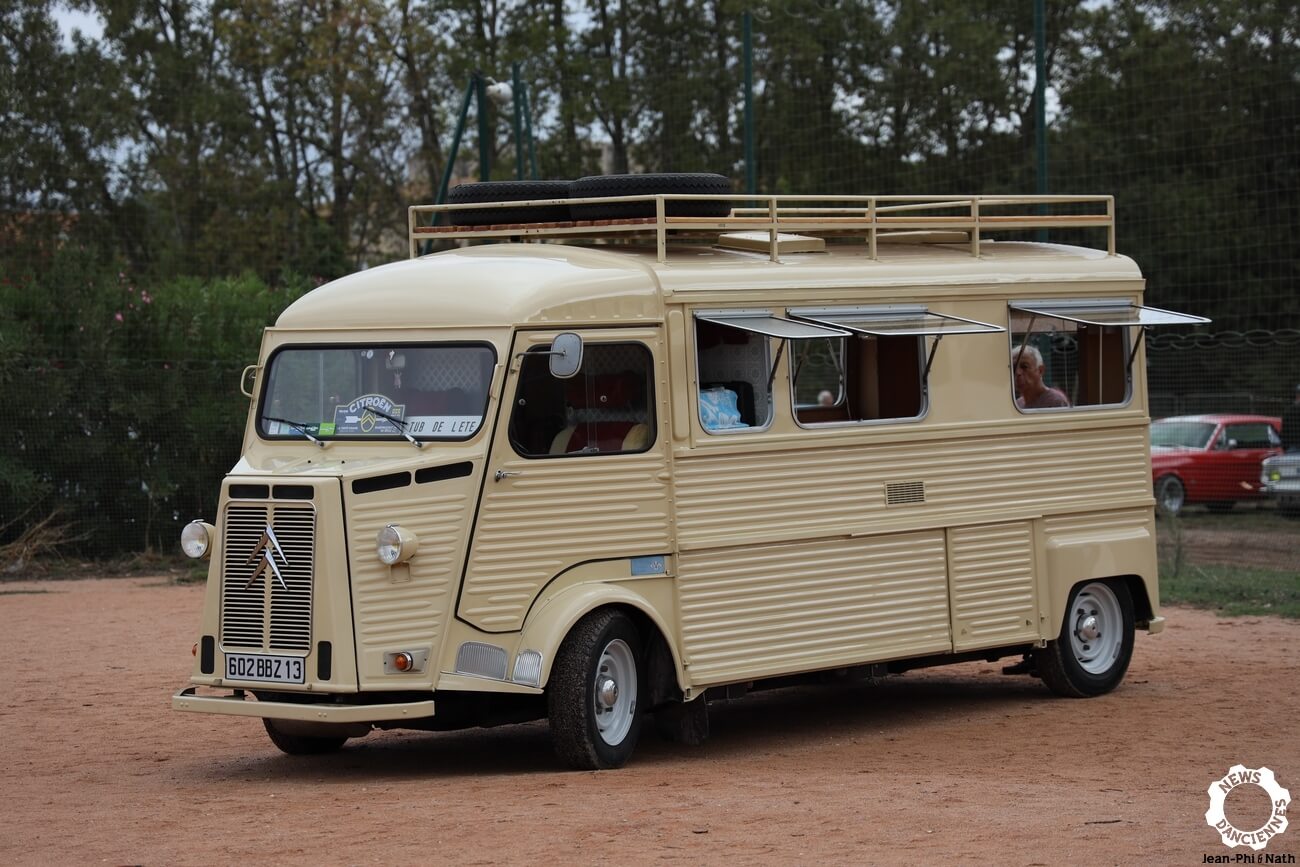
Its dissemination remained low, yet the restoration of the Citroën Type H will not necessarily be a puzzle. Admittedly, the fittings for a particular model year can be hard to find, but there are many specialists in this type of parts. On the mechanical side, Alepoc has everything it needs! The "Tub," sharing its mechanical components with many other models with chevrons, we have many parts in stock, you can view them here. And if you don't find what you're looking for, we can search for that missing piece for you !
And what if you want to leave then? Certainly, the Type H hasn't been as transformed as the VW Combi, and you'll need to carefully consider your layout. The diesel engines are almost indestructible and will take you to the ends of the earth if you maintain them properly. As for the interior, take out the circular saw and customize it according to your desires. If you don't feel up to the task, professional outfitters will be happy to help you.
You extended the summer in Citroën Type H? Send us your photos !
Published on
10-09-2021